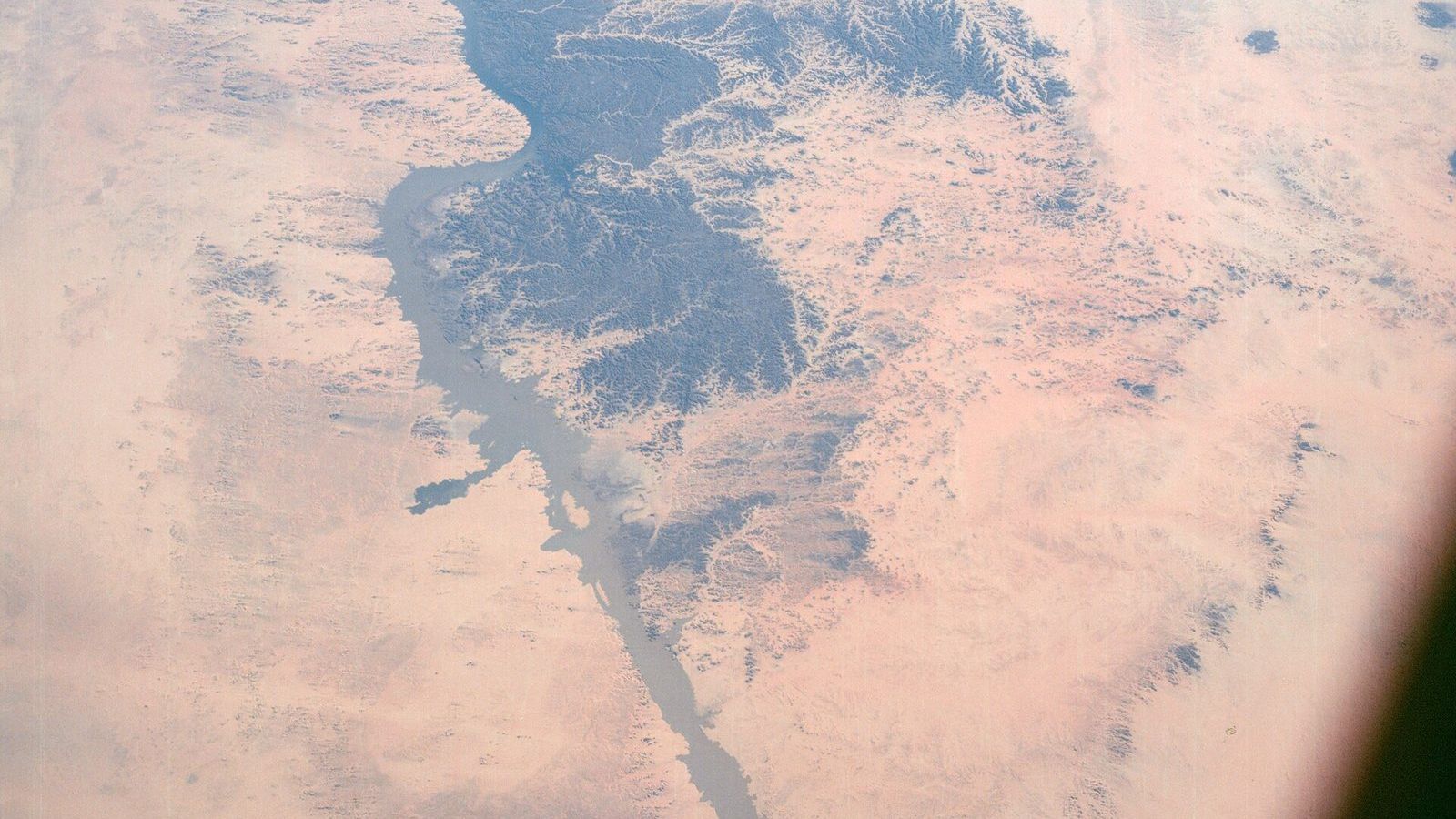
 Image: NASA, Apollo 7, 1968 (public domain); the Nile valley and Lake Nasser from orbit
Volcanoes, the Nile, and revolts under the Ptolemies
Egypt, the Greek historian Herodotus wrote, is the gift of the river. Every summer the Nile rose, spread over the floodplain, and left behind the water and the silt on which the year's crop depended. A good flood meant a full harvest and a full treasury. A low flood meant hunger, and two low floods in a row meant famine. The Egyptians measured the river on Nilometers and set the tax on the height, and their fear of a failed flood runs through their literature from the Old Kingdom to the Roman period. What they did not know was why the river sometimes failed. Part of the answer, it turns out, lies in volcanoes on the other side of the world.
Where the flood comes from
The summer flood of the Nile is not Egyptian water. It comes from the Ethiopian highlands, where the Blue Nile and the Atbara collect the rain of the African summer monsoon between June and September. The monsoon depends on the heating of the land north of the equator, which draws the belt of tropical rain northwards each summer. Anything that cools the northern hemisphere weakens the monsoon, keeps the rains further south, and starves the Blue Nile.
A large volcanic eruption does exactly that. It throws sulphur into the stratosphere, where it forms a veil of droplets that reflects sunlight for a year or two and cools the surface, more in the north than in the south if the volcano is in the north. The eruption of Pinatubo in the Philippines in 1991 cooled the world by about half a degree for more than a year and weakened the monsoon rains that followed.
The ice and the river
The record of past eruptions is kept in the ice sheets. Each year's snowfall in Greenland and Antarctica becomes a layer of ice, and the sulphur from a big eruption falls on it as acid snow. Cores drilled through the ice and read layer by layer give a list of eruptions with their dates and their size, back for thousands of years. By the 2010s this list had become precise enough to date eruptions to within a year or two for the first millennium BC.
The record of the river is kept by the Nilometer at Cairo, where the height of the flood was written down every year from AD 622 to 1902, the longest continuous record of any natural phenomenon. In 2017 Joseph Manning, a historian of Ptolemaic Egypt at Yale, and five climate scientists, among them Francis Ludlow of Trinity College Dublin, compared the two records for the Islamic period. In the years after a big eruption, the Nile flood was on average about 22 cm lower than in other years, and the chance of a seriously low flood rose sharply. The physical link was established with a thousand years of data.
Back to the Ptolemies
The next step was to use the ice-core list for the three centuries of the Ptolemies, from 305 to 30 BC, when there is no Nilometer record but there is a dense documentary record on papyrus and stone. Manning and his colleagues listed the dates of the known revolts in Egypt and the dates on which Ptolemaic wars against the Seleucid kings of Syria ended, and tested whether these events clustered after eruptions. They did, more often than chance would allow.
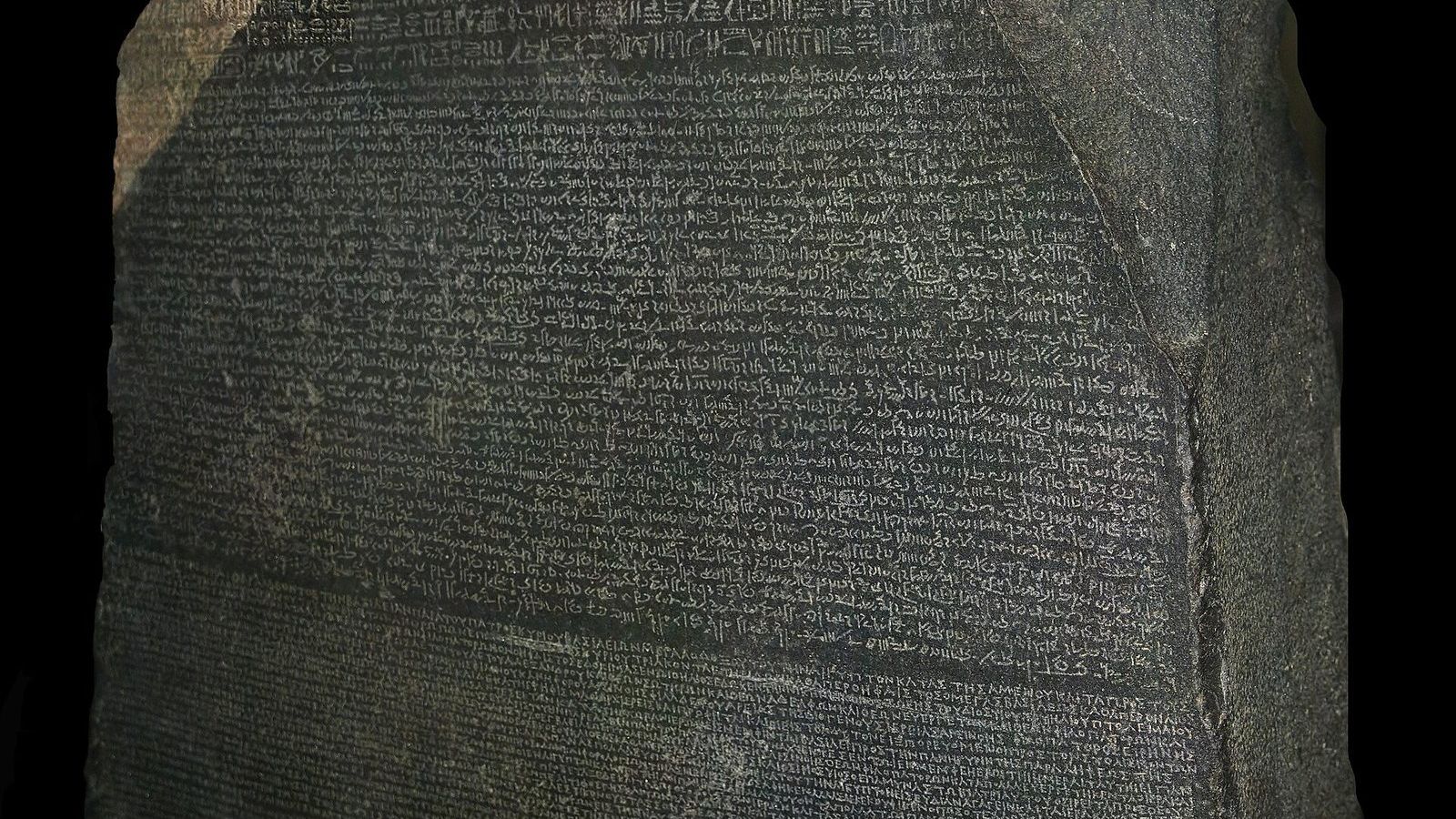
The clearest case is the great revolt of the Thebaid. In 209 BC the ice records a large eruption. Within three years Upper Egypt was in rebellion under native kings who ruled from Thebes for twenty years, until 186 BC, and the kingdom of Ptolemy IV and Ptolemy V nearly broke in two. The Rosetta Stone, written during that revolt, records the siege of a rebel town in the Delta in the same years. Another eruption falls in 245 BC, the year in which Ptolemy III, who had marched as far as Babylon in the Third Syrian War, broke off the campaign and came home; the Roman writer Justin says that he was recalled by domestic unrest. The decree of Canopus of 238 BC, passed by the priests a few years later, praises the king for importing grain at great expense when the river had failed to rise.
The paper, published in Nature Communications and free to read at nature.com, does not claim that volcanoes caused the revolts. Its argument is that a failed flood put stress on a society that was already divided between a Greek ruling class and an Egyptian population, and that the stress turned into revolt where there was something to revolt about. The eruptions explain the timing, not the grievance.
The end of the Ptolemies
A later study by a different team, published in 2020, took the method to the last years of Cleopatra VII. An enormous eruption of the volcano Okmok in Alaska, dated by the ice to early 43 BC, produced two of the coldest years of the last 2,500 in the northern hemisphere. In Egypt the floods of 43 and 42 BC failed, and the papyri and the Roman sources record famine, plague, and the abandonment of land in the years before Actium. Cleopatra's Egypt was weakened by weather at the moment it had to fight Rome, and the link to a volcano thousands of kilometres away could not have been suspected until the ice was read.
What this changes
Egyptologists have always known that the Nile mattered. What the ice cores add is a dated series of shocks to the river that is independent of the Egyptian evidence, so that cause and effect can be tested rather than assumed. The same method is being applied to the end of the Old Kingdom, when a run of low floods is blamed in the Egyptian texts themselves, and to the Bronze Age collapse. For the Ptolemaic period, where the papyri can be dated to the month, it works best, and it has turned a vague sense that the Ptolemies had bad luck with the river into a chronology of specific bad years.
Unit 12 of the Egyptology Masterclass, Late Egypt, the Ptolemies, and Rome, presents Joseph Manning's work as its second research spotlight and redraws the published plot of eruption years against revolt years in a worked case. Unit 7 explains the Nilometer, the flood heights of good and bad years, and the medieval record on which the modern analysis rests.