 Image: Hans Hillewaert (CC BY-SA 4.0)
What the Rosetta Stone actually says
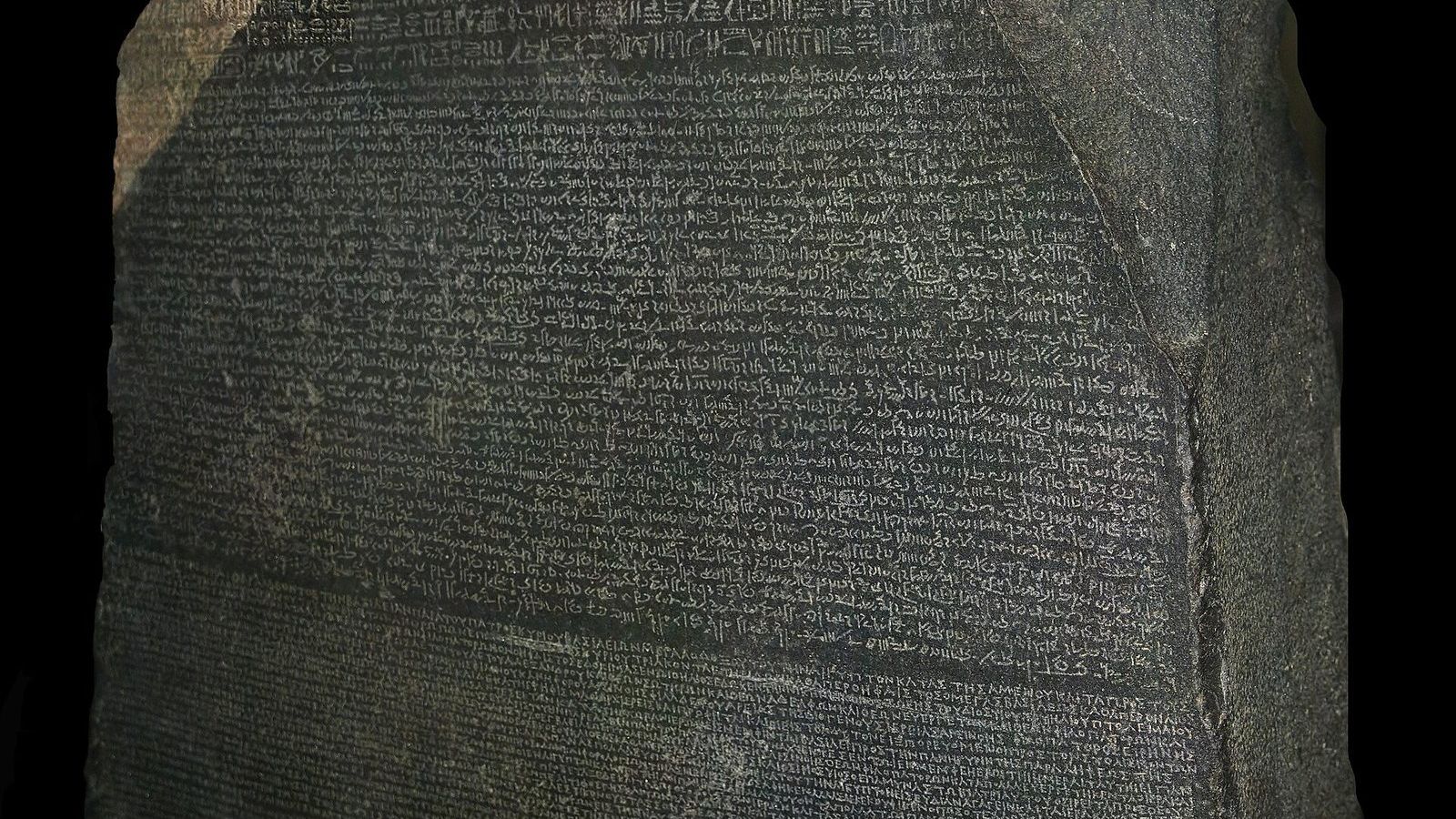
The Rosetta Stone is a broken slab of granodiorite, 112 cm high, 76 cm wide, and 28 cm thick, in the British Museum since 1802. It is famous for what it made possible, which was the decipherment of hieroglyphs. The text itself is read far less often, and it deserves to be, because it is a precise record of how Egypt was governed under the Greek kings: a contract between a throne that needed the temples and temples that needed the throne.
The occasion
Ptolemy V Epiphanes came to the throne in 204 BC at the age of about five, after the deaths of both his parents in circumstances that were never explained. Egypt was in trouble. The south of the country had been in revolt since 206 BC under native kings at Thebes; the Delta had its own rebels; the Seleucid king Antiochus III had taken the Ptolemaic possessions in Syria and Palestine. The regents who ruled for the child were unpopular and short-lived.
In 197 BC, when the king was about thirteen, he was crowned at Memphis according to the Egyptian rites, the first Ptolemy known to have been so crowned. A year later, in the spring of 196 BC, the priests of all the temples of Egypt gathered at Memphis for the anniversary, and on 27 March, the eighteenth day of the Egyptian month Mecheir in the ninth regnal year, they passed the decree that the stone records.
What the king had done
The first half of the decree is a list of the king's benefactions, written to be read as the reasons for what follows. The priests record that Ptolemy has given revenues of silver and grain to the temples; that he has remitted some taxes entirely and reduced others, so that the people and all the rest might prosper in his reign; that he has cancelled debts owed to the crown; that he has freed those who had been in prison for a long time; that he has confirmed the temples' income from the land and the vineyards at the rate it had under his father; that he has relieved the priests of the annual journey to Alexandria; that he has ordered that no one be pressed into the navy; and that he has exempted the temples from the tax on fine linen and reduced the levy on cloth.
The decree also records a war. A town in the Delta, Lycopolis in the Busirite nome, had been held by rebels, and the king had besieged it. The text describes how he dammed the canals and brought up troops in the eighth year, how the Nile flood of that year was high and threatened the siege works, and how he took the town and punished the rebels there as, it says, Horus had punished those who rebelled in that same district in the beginning. The rebels who had surrendered elsewhere he pardoned. These were real events of 197 BC, and the Greek papyri confirm them.
Finally, the priests record the king's gifts to the sacred animals, the Apis bull of Memphis and the Mnevis bull of Heliopolis, and to the burials of the previous Apis bulls, which had been costly.
What the priests gave in return
The second half is the priests' side of the bargain. In every temple of Egypt a statue of the king shall be set up, called Ptolemy the defender of Egypt, with a statue of the local god beside it handing him the weapon of victory, and the priests shall serve these statues three times a day. A wooden shrine with a gilded image of the king shall stand in the sanctuary of each temple among the shrines of the gods and shall be carried out with them in procession at the great festivals. The shrine shall be recognizable by ten royal crowns on it, with a serpent on each, and by the double crown in the middle. The king's birthday and the day of his accession shall be celebrated every month as festivals, and the first five days of the month of Thoth as a festival of the king every year, with sacrifices and wine. The priests themselves shall add to their titles the words priests of the god Epiphanes Eucharistos, the god who appears, the gracious one, and this title shall be written in all their documents and engraved on their rings. Private persons may set up the king's shrine in their houses and keep the festivals as well.
The last clause is the one that matters most to us. The decree shall be cut on a stela of hard stone in sacred writing, in native writing, and in Greek writing, and set up in every temple of the first, second, and third rank beside the statue of the king. Sacred writing is hieroglyphs, native writing is Demotic, the everyday script of Egyptian in the Ptolemaic period, and Greek was the language of the court. The stone from Rashid is one of those copies, broken, with its top missing. Others have been found, and a nearly complete copy from Nubayrah in the Delta supplies the lost opening of the hieroglyphic text.
Why the bargain was needed
The decree shows a monarchy that could not rule Egypt without the priests and a priesthood that could not keep its estates without the king. The Ptolemies were Macedonian Greeks ruling from a Greek city. To the Egyptians they presented themselves as pharaohs, and the only institution that could confer that status was the temple. The priests, in turn, needed the crown's protection for their land, their tax exemptions, and their revenues, and in a country where Thebes was in revolt under native kings, the choice of side was real. The synod at Memphis declared for Ptolemy and said so on stone in three scripts, in every temple that mattered. It was propaganda, but it was also a treaty, and the earlier decrees of the same kind, at Canopus in 238 BC and at Raphia in 217 BC, show that the arrangement had been in force for sixty years.
Reading it today
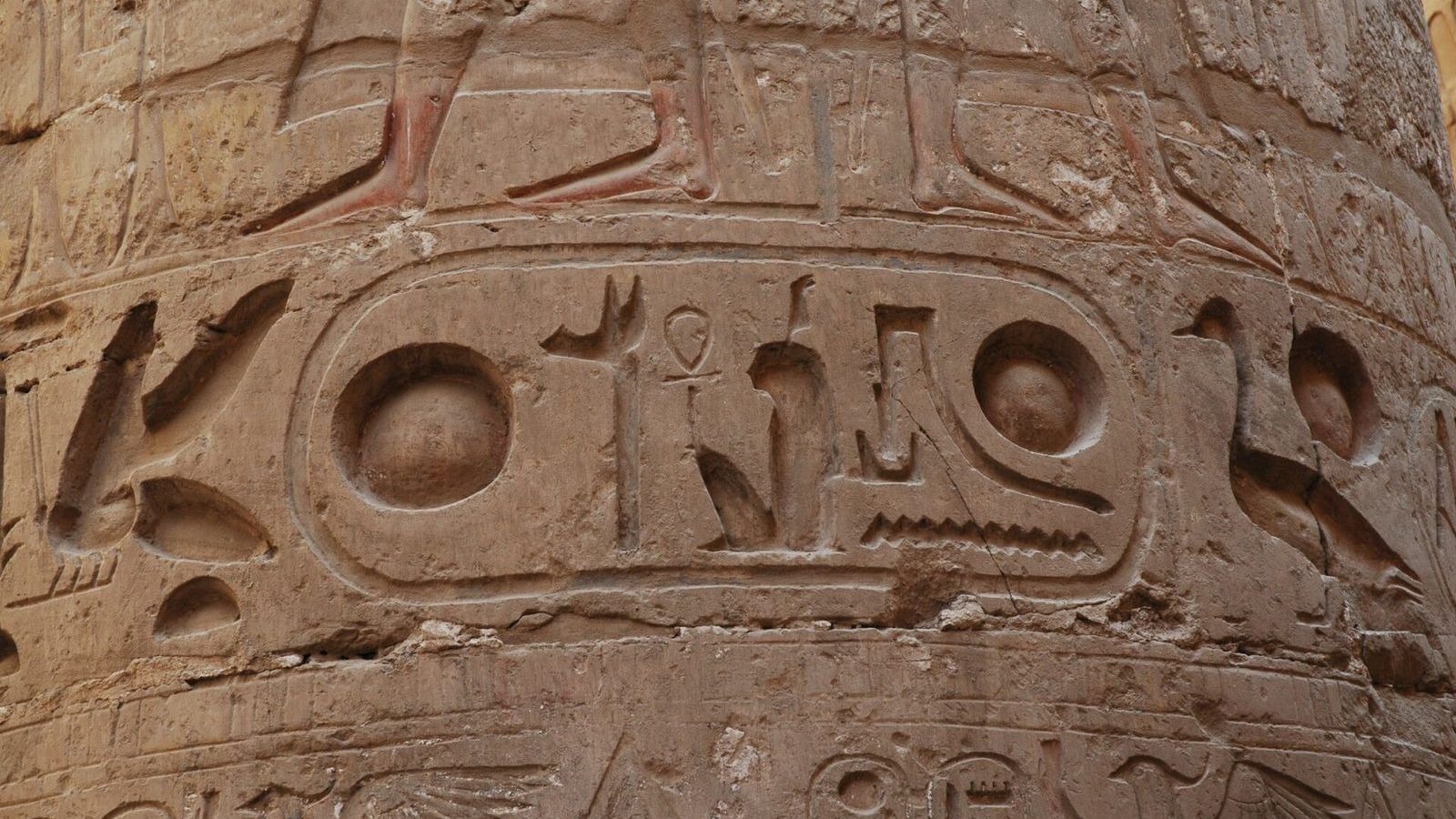
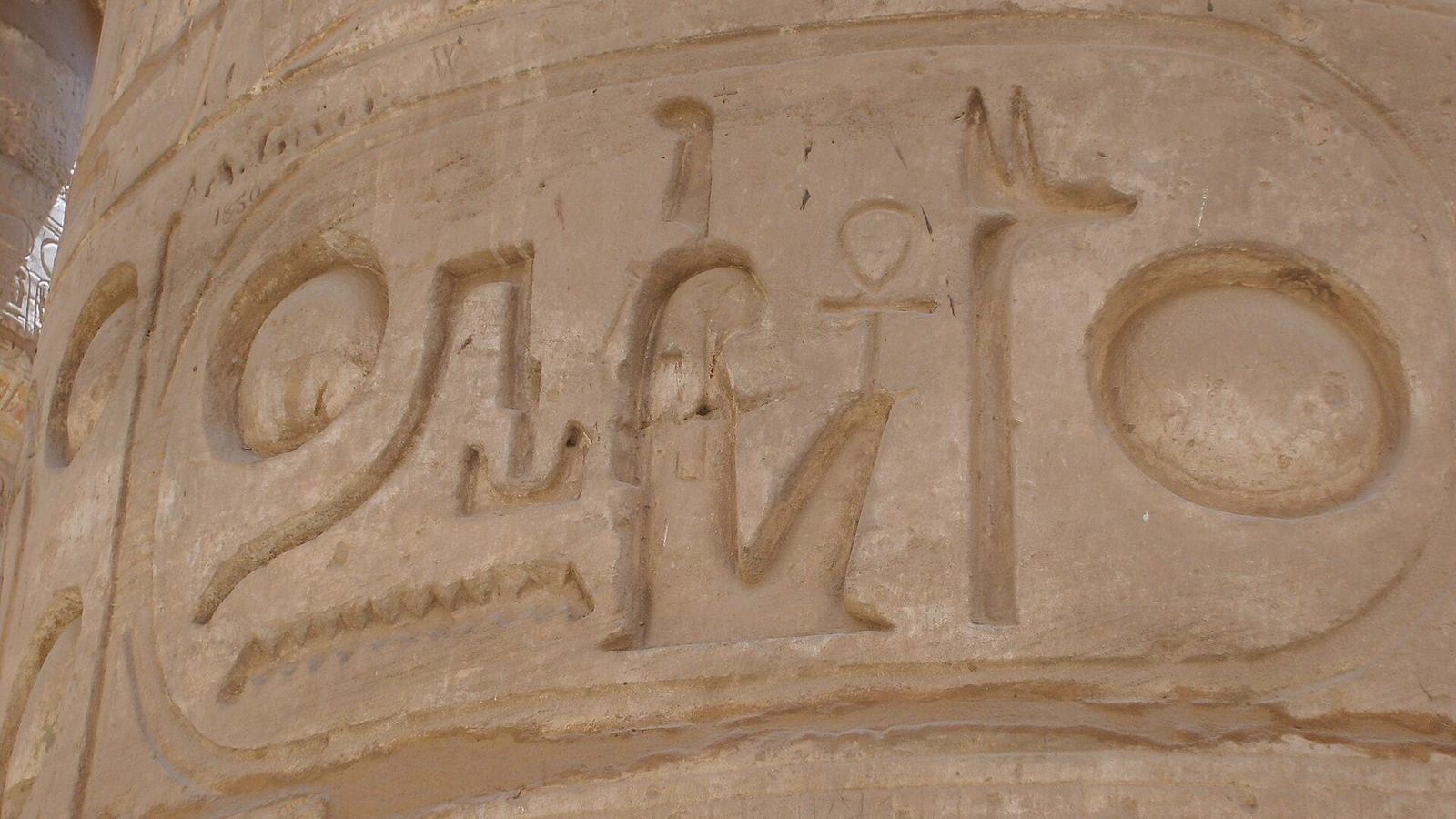
The Greek text runs to 54 lines, the Demotic to 32, and the surviving hieroglyphic part to 14. The three versions are not word for word identical; each was composed for its script's readers, and the hieroglyphic text uses the archaic formulae of temple language. The British Museum displays the stone without its glass case now, so that visitors can see the surface, and a few minutes with a magnifying glass will find the cartouche of Ptolemy, which Thomas Young and Jean-François Champollion read first. The decipherment story is told in the unit on hieroglyphs. The world the stone describes, the Egypt of the Ptolemies, with its two faces of Greek king and Egyptian pharaoh, is the subject of Unit 12.