 Image: Raimond Spekking (CC BY-SA 4.0)
The logbook of Merer and the stones of Giza
Wadi al-Jarf is a stretch of desert on the Egyptian coast of the Red Sea, about 120 km south of Suez. There is no town there, no temple, and no tomb. What there is, cut into a limestone ridge a few kilometres from the shore, is a row of long storage galleries, and on the beach a stone jetty that runs out into the sea. In 2013 the team of Pierre Tallet, then of the Sorbonne and now director of the French Institute in Cairo, cleared the entrance of one of the galleries and found, among the stones that had been used to block it, hundreds of fragments of papyrus. They are the oldest inscribed papyri known from anywhere, and they date to the end of the reign of Khufu, the builder of the Great Pyramid.
What the harbour was for
The galleries had been cut in the Fourth Dynasty to store the parts of boats. Expeditions came out from the Nile valley, carried their dismantled boats across the desert, assembled them at Wadi al-Jarf, and sailed across the Gulf of Suez to the Sinai peninsula, where the Egyptians mined copper and turquoise. When an expedition ended, the boats were taken apart again and stored in the galleries until the next one. Stone anchors, rope, and pottery jars with the name of Khufu lay in and around the galleries, and the jetty is the oldest harbour structure known.
The papyri belonged to the men of the last expedition that used the place. When they left, they blocked the galleries with stone and left their paperwork behind. Most of the fragments are accounts: lists of food delivered to the teams, of bread and beer, of grain and meat, and of the names of the men who received them. Two rolls are different. They are the daily journal of a team of workmen, kept over several months by their leader, a man called Merer.
Who Merer was
Merer held the title of inspector, in Egyptian sḥḏ, and commanded a team of about forty men. The team belonged to one of the larger gangs, called phyles, into which the workforce of the king was organized, and its name was written at the head of the journal. The papyrus is not a letter and not a monument. It is a working record, set out as a table, with a column for every day of the month and a line or two of hieratic script under each date saying where the team was and what it did. The year is given as the year after the thirteenth cattle count of Khufu, which in the counting of the Fourth Dynasty falls late in the reign, around his twenty-sixth or twenty-seventh year on the throne.
For the months that the two rolls cover, Merer's team was not at the Red Sea at all. It was working on the Nile, carrying limestone from the quarries of Tura, on the east bank south of modern Cairo, to Giza on the west bank. The journal was carried to Wadi al-Jarf afterwards, when the same team was sent to the coast, and it was left there with everything else.
One week on the river
The entries follow a pattern. The team spends a day or two loading blocks at Tura, sails down the river and across to the west bank, and unloads at a place the text calls the Lake of Khufu, or at the Horizon of Khufu, which is the Egyptian name of the Great Pyramid itself. Then the boats go back for more. A round trip takes a few days. In a ten-day Egyptian week the team makes two or three deliveries, and the journal notes the occasional day spent elsewhere, collecting food or mooring at a quay named after an official.
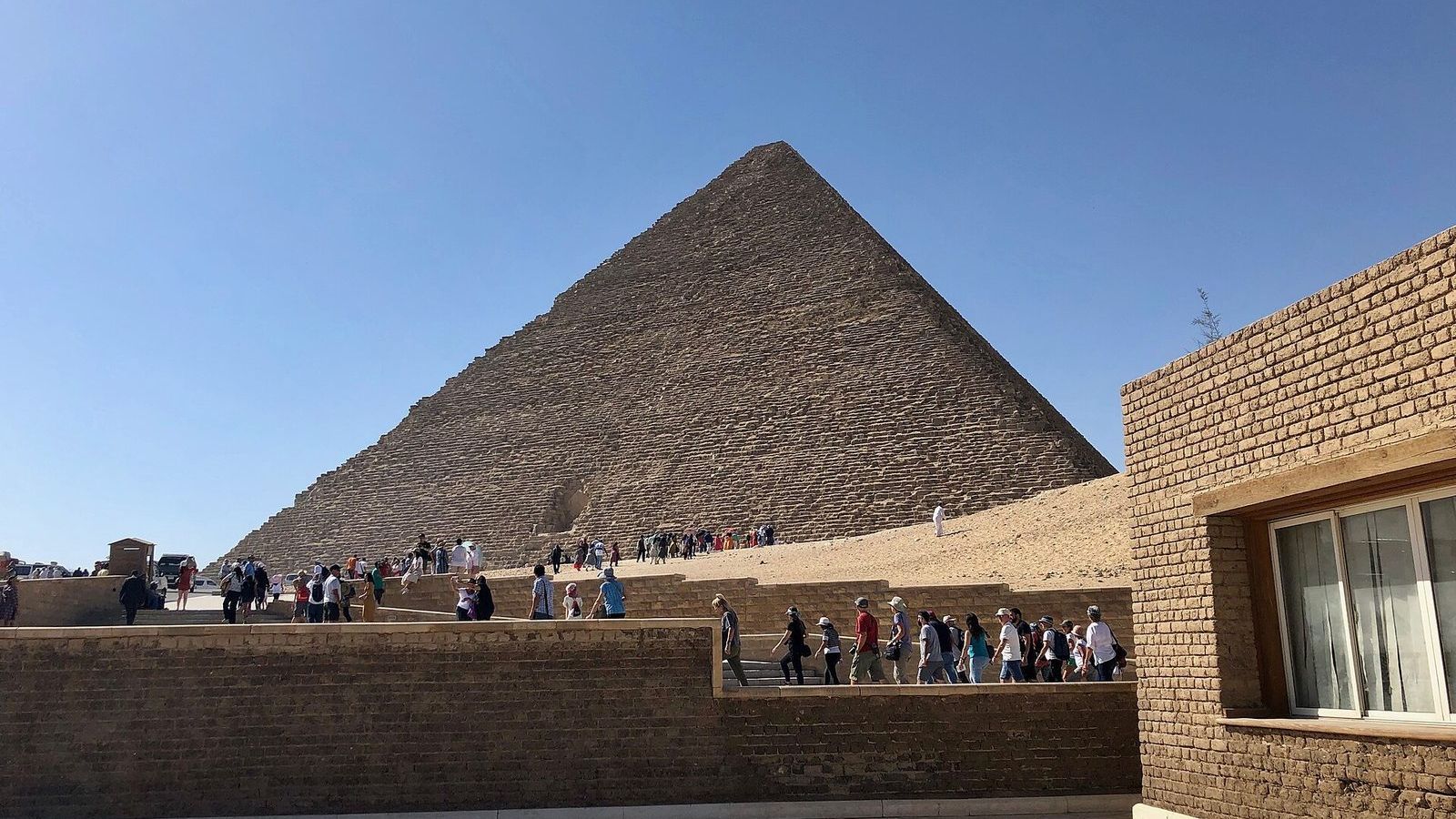
Tallet and his colleagues have estimated from the entries and from the size of the boats that each delivery brought about thirty blocks of fine white Tura limestone, each weighing between two and three tonnes. That is the stone of the pyramid's outer casing, the smooth skin of which only a few courses survive today at the base. The journal therefore records the final stage of the work, when the core of the pyramid was built and the builders were cladding it.
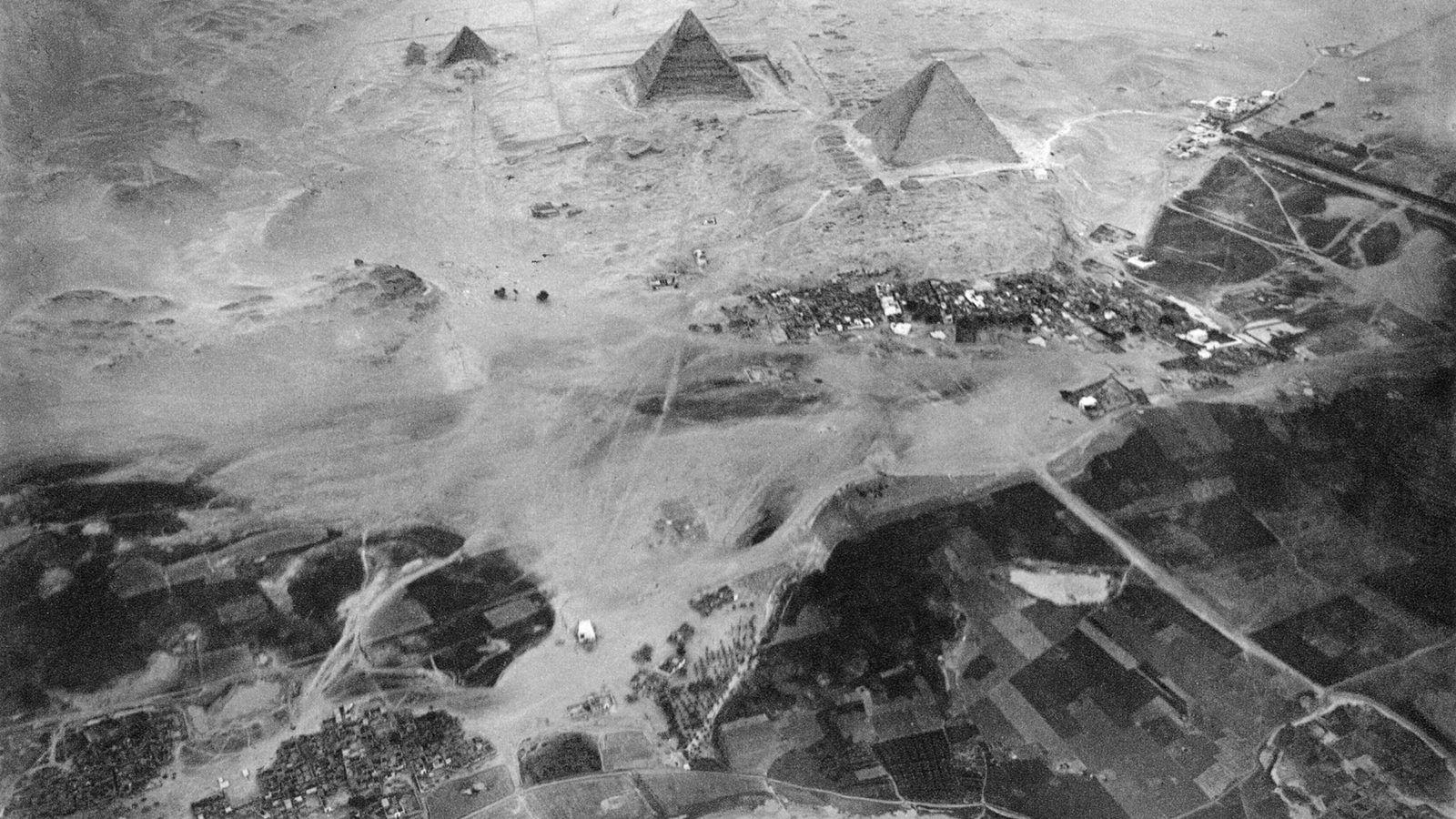
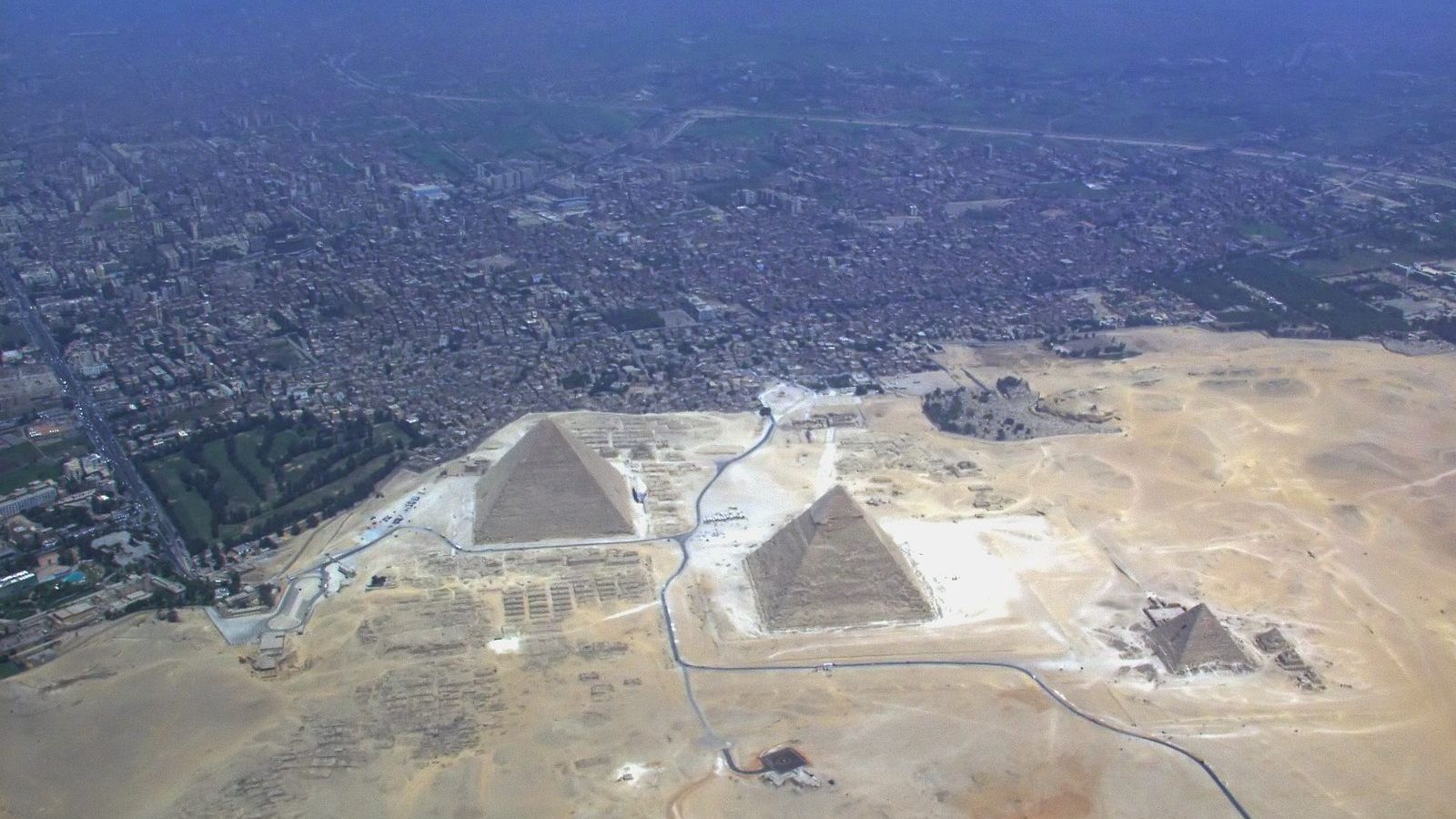
The place names fit the ground. The Lake of Khufu was a basin at the edge of the floodplain below the plateau, fed by a canal from the Nile, where boats could unload close to the foot of the causeway. The harbour was supervised by a man the papyrus names as Ankhhaf, who is known from his tomb at Giza and from a famous painted bust in Boston as a half-brother of Khufu and his vizier. A journal kept by a gang leader thus names the second most powerful man in Egypt as the official in charge of receiving the stones.
What it settles and what it does not
Before 2013 the organization of the pyramid's supply was reconstructed from indirect evidence: the quarries at Tura with their later inscriptions, the names of work gangs painted on blocks inside the pyramid, the bakeries and cattle bones of the workers' town at Giza. The journal of Merer is the first document written by someone who did the work, during the work. It settles several things at once. The casing stone came from Tura by boat, in the inundation season when the water was high and the boats could reach the plateau. The teams were small, mobile, and moved between jobs; the same forty men who shipped limestone in one season were on the Red Sea in another. The whole operation was run by the king's administration under named officials and was fed, like everything else in Egypt, with bread and beer measured out in rations.
It also fixes the date of this stage of the work in Khufu's reign and shows that the pyramid was still being finished towards the end of it, as the reign lengths in the king lists had suggested.
It does not say how the blocks were raised once they were on the plateau. No ramp, no sledge, and no lever appears in Merer's entries, because his job ended at the water's edge. The question of the ramps remains a matter of hypothesis and of the archaeology of the quarries at Giza, and the unit on the Pyramid Age treats it as such.
Reading the papyrus
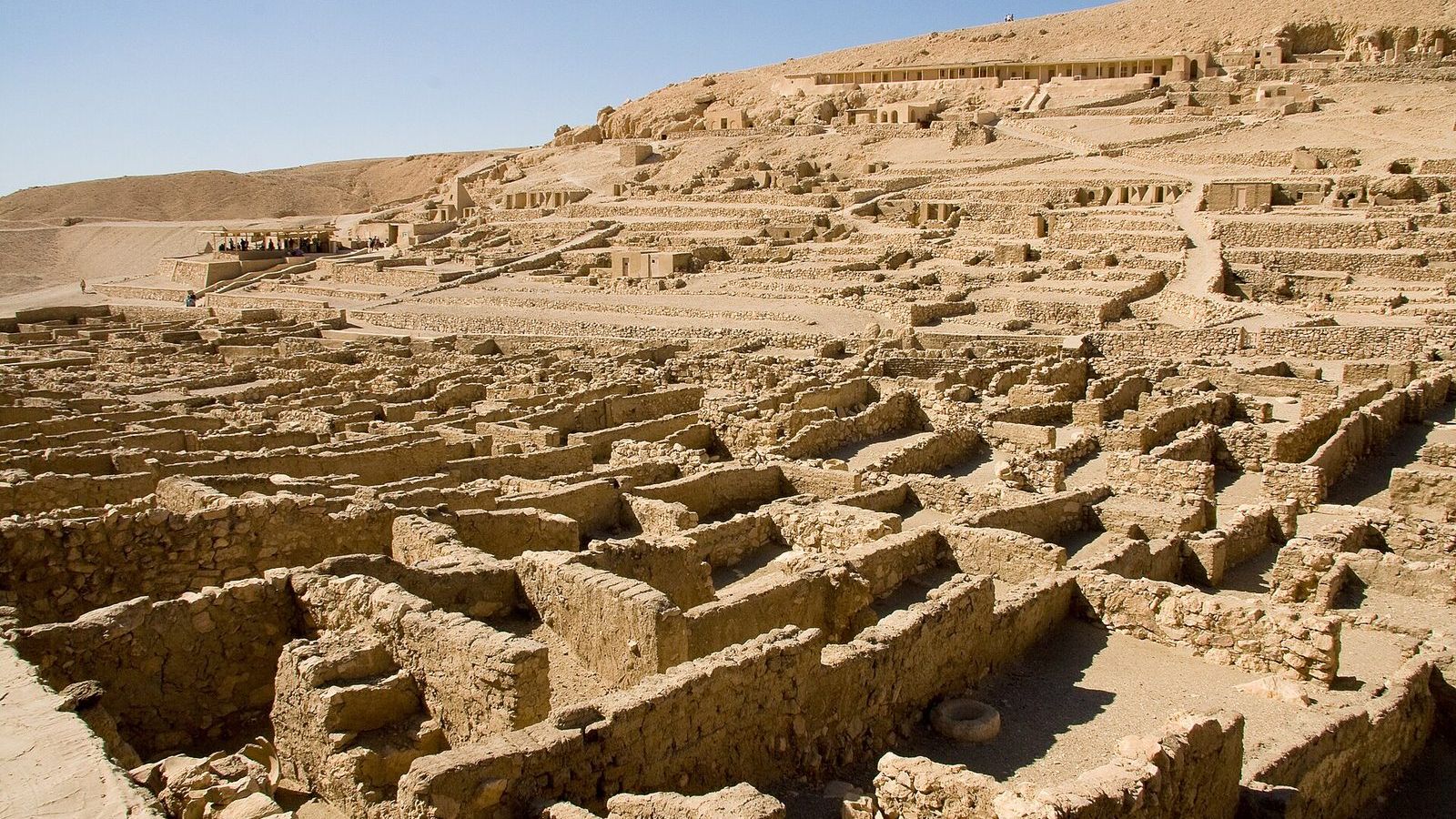
The journal is written in hieratic, the cursive form of hieroglyphs used for documents on papyrus. The tabular layout, with a day in each column, was the normal form of an Egyptian administrative record for the next two thousand years; the work journals of the tomb builders of Deir el-Medina, 1,300 years later, look much the same. The French publication gives the hieratic, a transcription into hieroglyphs, a translation, and a commentary, and a report in English is published in the Journal of Ancient Egyptian Interconnections. The site report on the harbour appeared in the Bulletin of the French Institute in Cairo, volume 112, and can be read free of charge.
The papyri are now in the Egyptian Museum in Cairo, and a selection has been exhibited there. Anyone who stands in front of them is looking at the handwriting of a man who watched the Great Pyramid being finished and wrote down, day by day, what his team had carried to it.
Where this appears in the masterclass
Unit 4 of the Egyptology Masterclass, The Pyramid Age, uses the journal in its section on quarries, transport, and supply, and turns one week of Merer's entries into a monthly tonnage in a worked case. Pierre Tallet's harbour is the unit's research spotlight. Unit 1 borrows the journal's day rates once, as a measure of how fast a boat moved on the Nile, in its section on the map of Egypt.