 Image: Andrew (CC BY 2.0)
The tomb builders who put down their tools
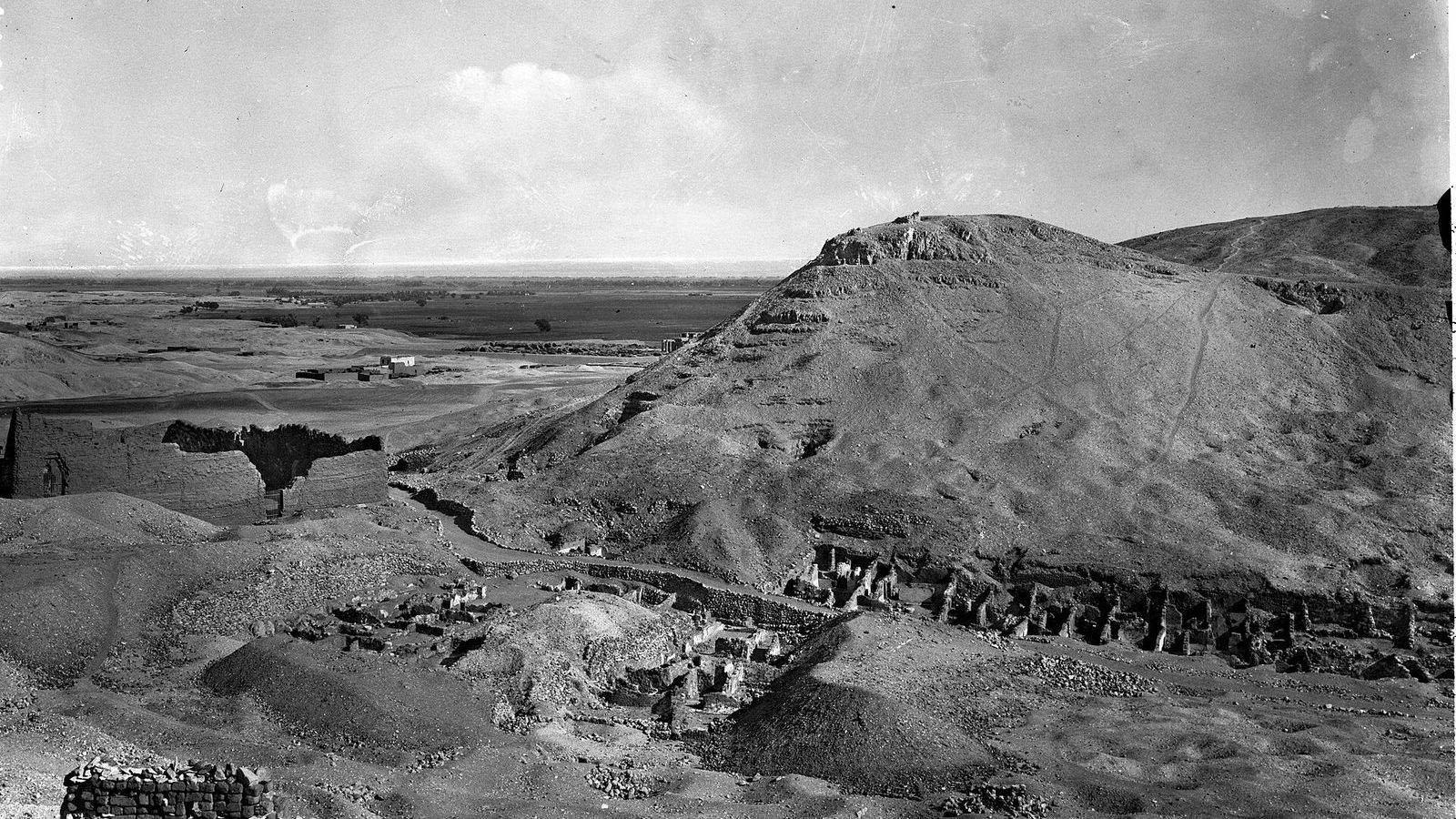
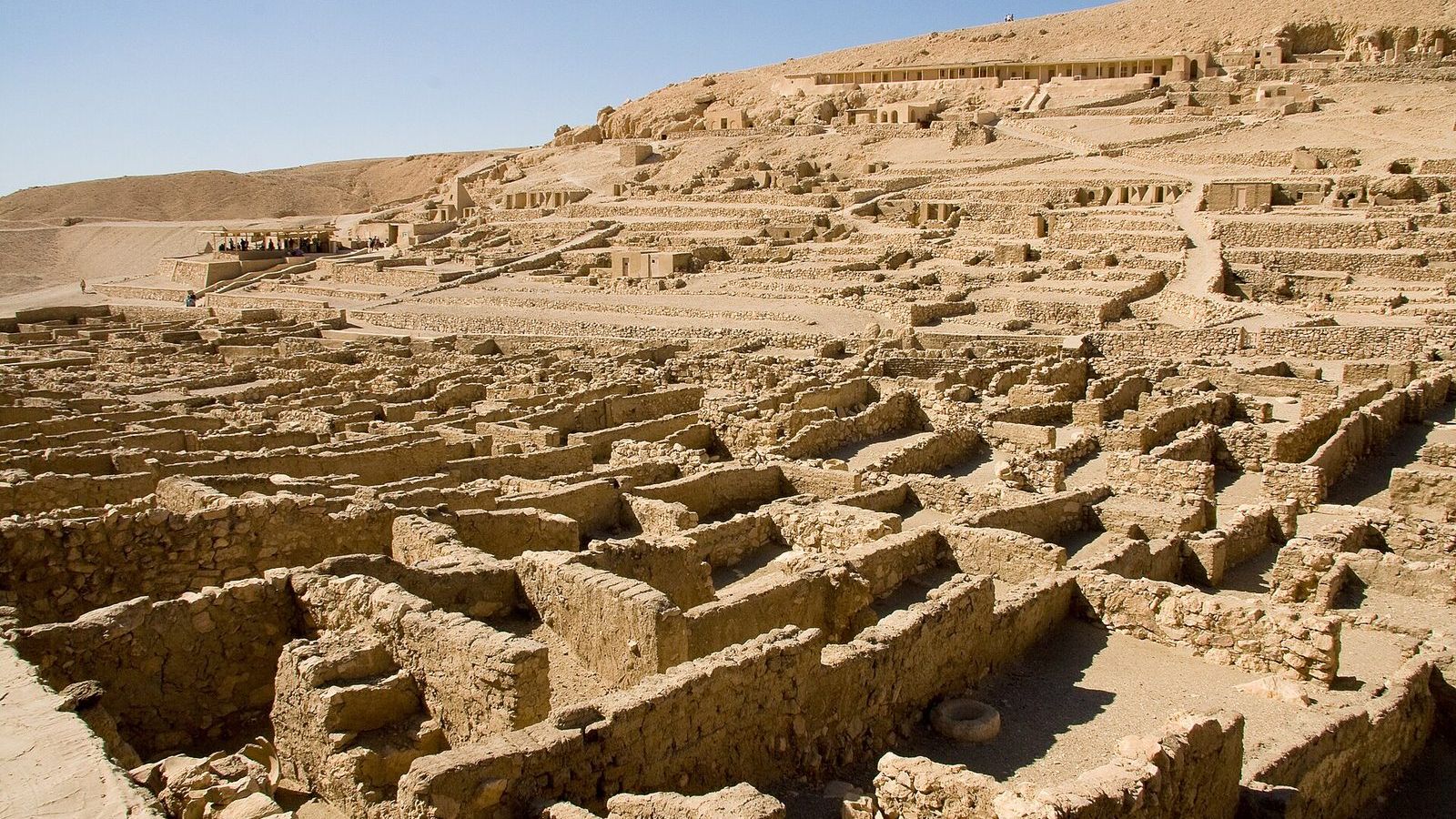
On the west bank of the Nile at Thebes, in a small valley behind the hills that hide the Valley of the Kings, lies a village of about seventy houses inside a wall. The Egyptians called it the Place of Truth. We call it Deir el-Medina. For about four hundred years, from the early Eighteenth Dynasty to the end of the Twentieth, it housed the workmen who cut and decorated the tombs of the kings, together with their families. Because they were literate and because the desert kept their rubbish, we know more about them than about any other community of ordinary people in the ancient world. We know their names, their wages, their lawsuits, their absences from work, and, in one remarkable document, the words they used when they went on strike.
How the workmen were paid
Egypt had no coins until the Persian period, and the workmen were paid in kind. The state delivered their wages monthly as grain: emmer wheat for bread and barley for beer. A workman's monthly ration was 4 khar of emmer and 1.5 khar of barley, a khar being a sack of about 77 litres. The foremen and the scribe received more. On top of the grain came fish, vegetables, firewood, water carried up from the river, pottery, and from time to time cakes, beer, and meat as a bonus from the temple. A workman's grain was enough to feed a family and leave a surplus to trade for other things, which is why the village had a lively barter economy in which beds, goats, oil, and linen all had prices in copper by weight.
The grain came from the granaries of the great temples on the west bank, which acted as the state's warehouses. When the deliveries were late, the village went hungry, and late deliveries became common in the Twentieth Dynasty as the state's finances weakened.
Year 29
The document is a papyrus in the Egyptian Museum of Turin, written by the village scribe Amennakht, who kept the official record of the gang. It covers events in the twenty-ninth regnal year of Ramesses III, which falls about 1157 BC in the chronology this program uses. The king was preparing to celebrate his jubilee, the sed festival, and the administration of Thebes was in disorder.
The first entry is dated to the tenth day of the second month of the winter season. The workmen, the papyrus says, passed the five walls of the necropolis, the guard posts that marked the limit of their world, and sat down behind the mortuary temple of Thutmose III. It was the eighteenth day of the month by their reckoning of the delivery cycle, and no grain had come. The officials of the temple came out and asked why they had left their work. Their answer was recorded: they were hungry; eighteen days of the month had passed and they had received nothing. They had come, they said, because of hunger and thirst, because there was no clothing, no ointment, no fish, and no vegetables. They asked that the king be told, and that the vizier be told, so that provisions be given.
The next day they sat down at the gate of the Ramesseum, the mortuary temple of Ramesses II, which had the largest granaries on the west bank. On the following day they went inside it and would not leave. The priests and the police chief Montumose tried to persuade them to return; the chief of police admitted he had no grain to give. Only after several days were rations found and distributed, partly, it seems, from the temple's own stores.
The strikes repeated
The settlement did not hold. The papyrus records further walkouts in the following months. On one occasion the workmen declared that they would not go back, and that the vizier should be told that they were striking because of the wrongs done to them in the reign of the king. The vizier To, when he came to Thebes, sent word that he had little to give because the granaries were empty, and he distributed half rations. On another occasion the men sent a letter to the mayor of Thebes, who provided grain from his own stores and was accused of robbing the temple to do it. In the next regnal years the record shows the same pattern, with shortfalls, protests, and emergency deliveries. The strike of year 29 was the first and the best recorded, and it was not the last.
Other papyri and ostraca from the village mention the same events in passing. A work journal notes the days on which the gang did not work, with the laconic reason that they were idle because of hunger. The Deir el-Medina Database at Leiden, which summarizes thousands of these documents, lists the texts of year 29 together, and the recurrence of the word strike in its summaries is the measure of how often it happened.
What was unusual about it
The workmen of Deir el-Medina were not slaves and not peasants. They were skilled craftsmen in the direct employ of the crown, with a corporate identity, a court of their own for small cases, and literate members who could write to the vizier. Their walkout was an appeal to the king's justice, the principle the Egyptians called maat, and they said so: they claimed their rations as what was due to them. The officials treated them accordingly, by negotiating rather than by punishing. There is no record that anyone was flogged or dismissed for the strike.
The wider picture is a state whose grain economy was failing. Ramesses III had fought off the Sea Peoples and the Libyans a generation earlier, and his reign ended with a conspiracy in his own harem. Under his successors the record of Deir el-Medina shows late wages, rising prices for grain measured in copper, the robbing of royal tombs by men who knew where they were, and finally, under Ramesses XI, the abandonment of the village. The strike of year 29 is the first clear sign of that decline, written by the people who felt it first.
Where this appears in the masterclass
Unit 7 of the Egyptology Masterclass, Life in the Black Land, uses Deir el-Medina as the anchor of its account of daily life, divides a workman's monthly ration into loaves and jugs for a household in a worked case, and reads the words of the strikers in an excursion. Unit 8 places the strike in the long decline of the New Kingdom, with the same date, year 29 of Ramesses III, about 1157 BC.