
Daily life and Deir el-Medina
What ordinary Egyptians ate, earned, and wore, how a household and a village court worked, and what the ostraca and bodies of Deir el-Medina say about the people who built the royal tombs. The articles go with the unit on life in the Black Land.
Articles
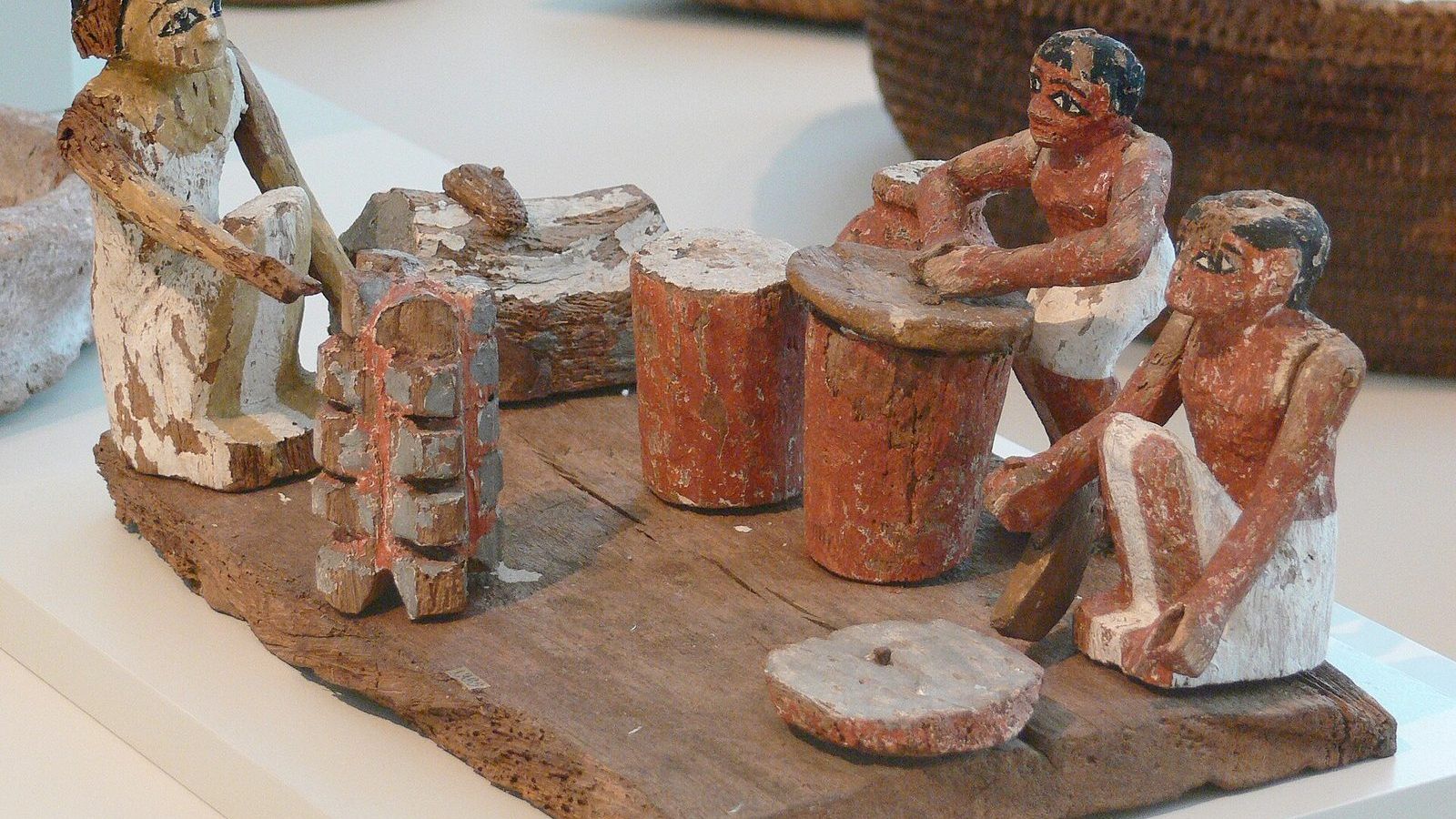
What the Egyptians ate, in numbers
Bread and beer were the Egyptian diet and the Egyptian wage. The ration lists of Deir el-Medina say exactly how much grain a workman received each month. Here is what that grain became and how many people it could feed.
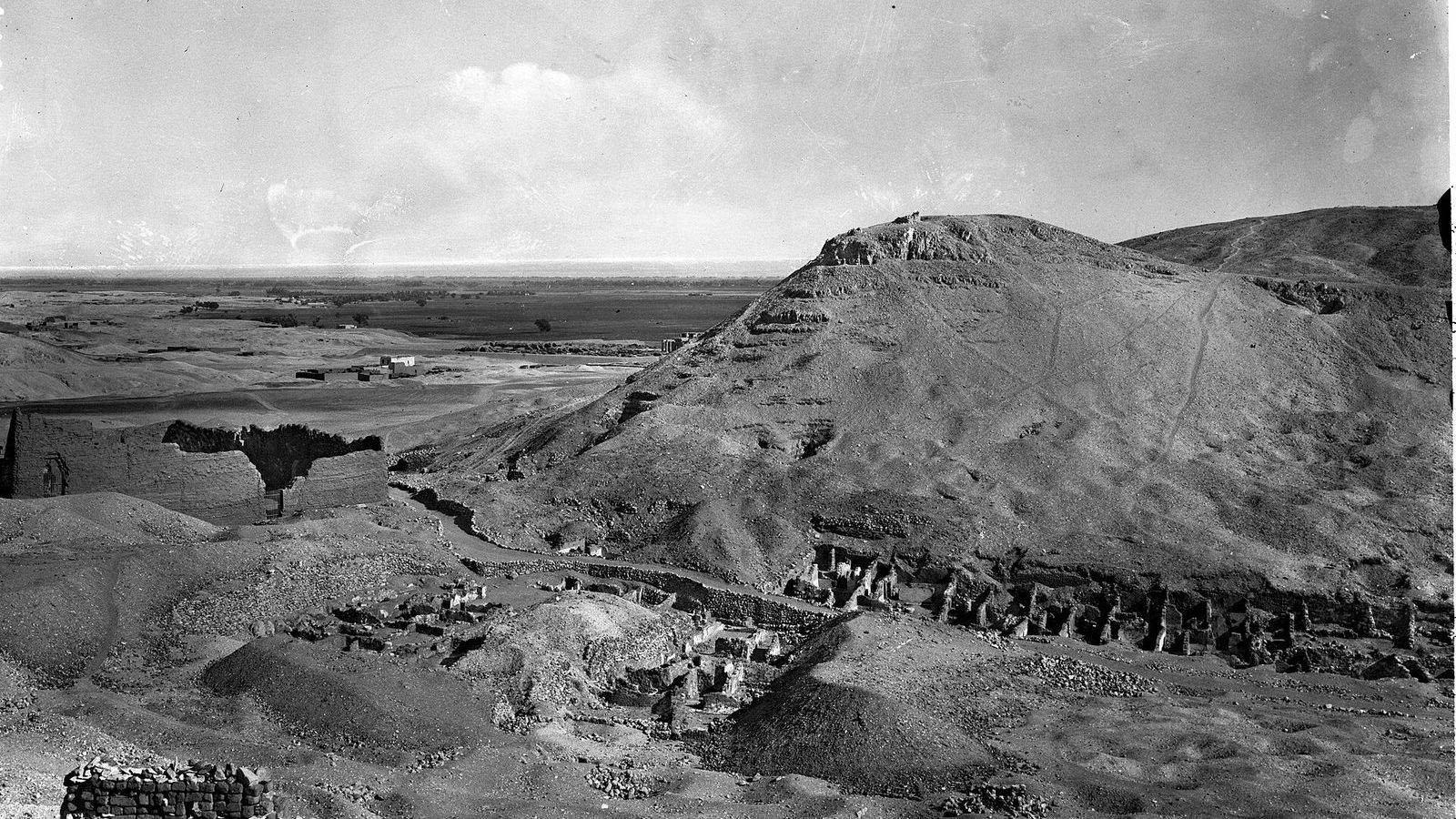
The woman with thirty tattoos
In 2014 a bioarchaeologist working at Deir el-Medina turned an infrared camera on the torso of a mummified woman and found more than thirty tattoos: eyes, cows, baboons, lotus flowers, and snakes. Nothing like it had been seen on an Egyptian body.
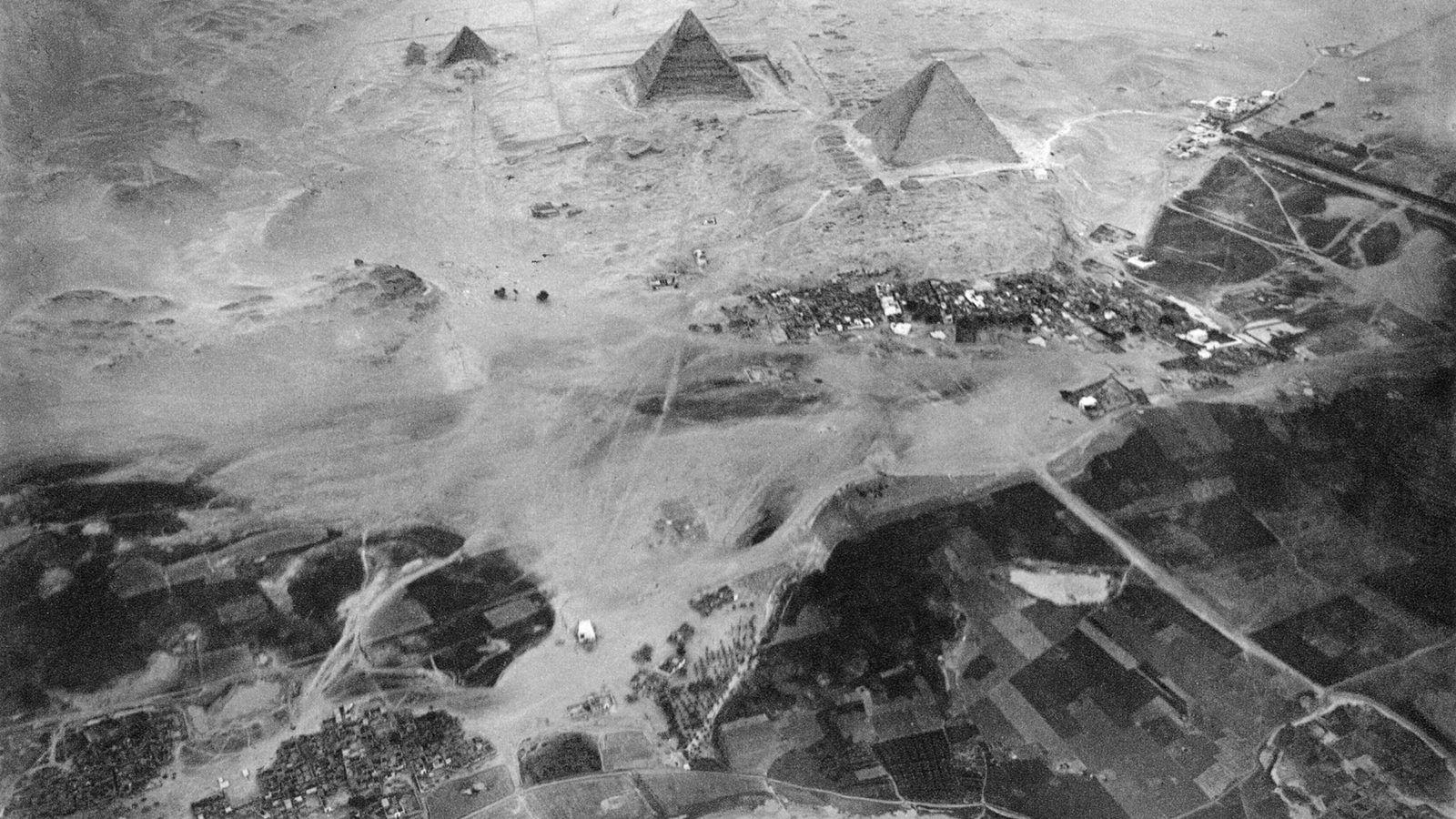
Why Cleopatra lived closer to us than to the pyramids
Cleopatra VII died in 30 BC. The Great Pyramid was finished about 2560 BC. The Moon landing was 1,999 years after her death and the pyramid was about 2,530 years before it. Egyptian history is long in a way that is hard to feel, and the Egyptians themselves felt it too.
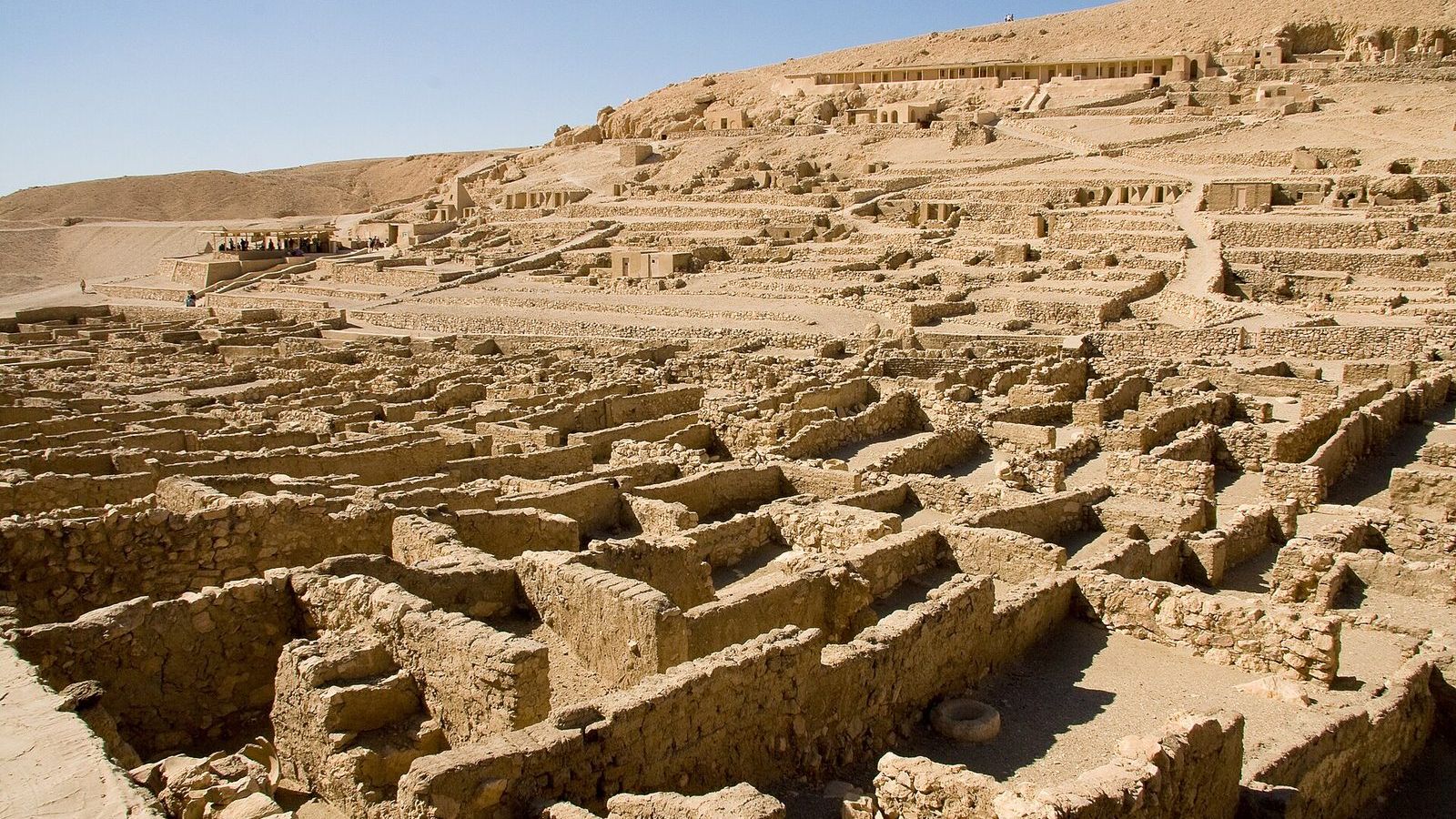
The tomb builders who put down their tools
In the twenty-ninth year of Ramesses III the men who cut the royal tombs stopped work because their grain had not arrived. A scribe wrote down what they said. It is the oldest strike in writing.