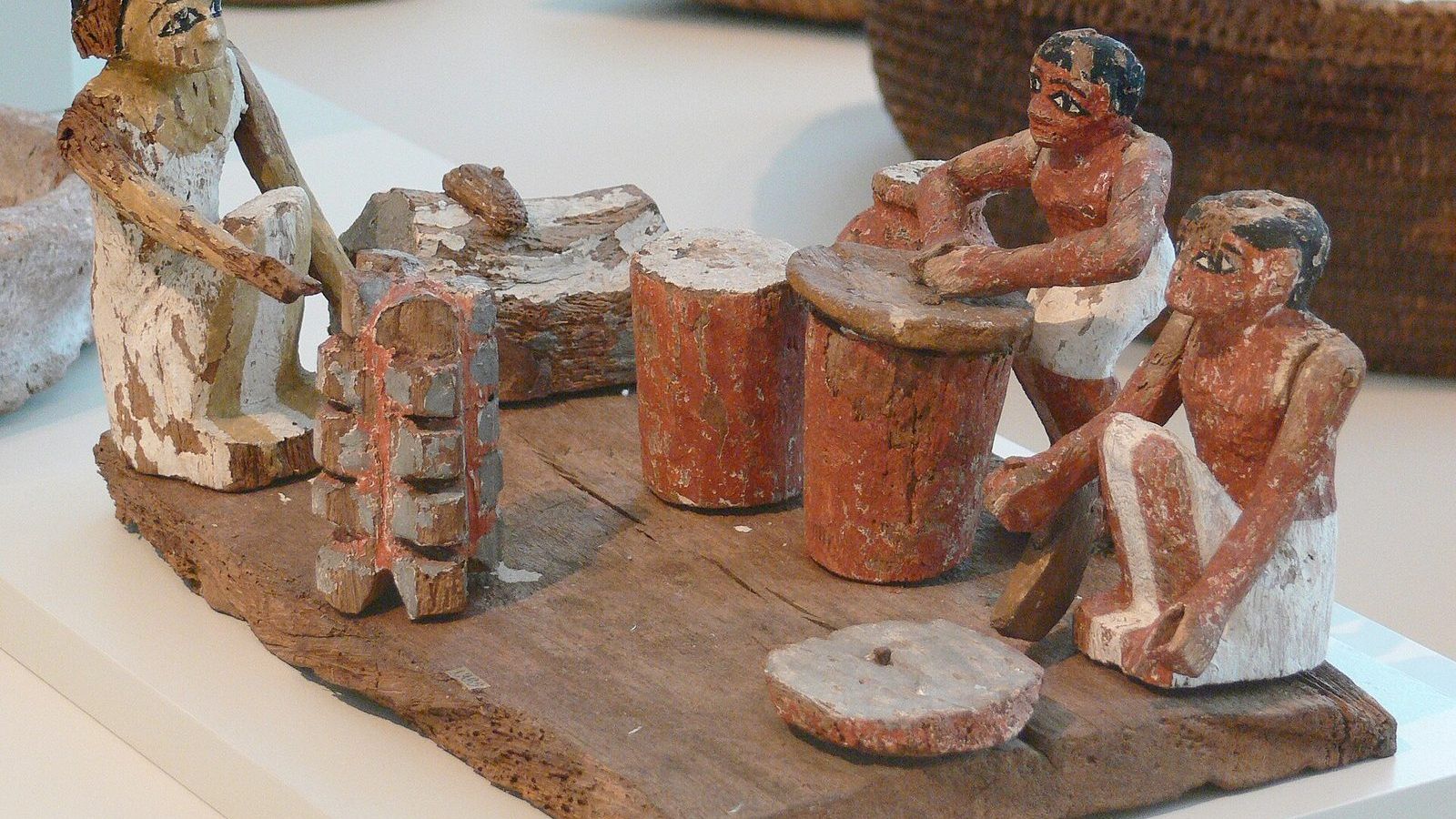
 Image: Andreas Praefcke (public domain); a Middle Kingdom model of a kitchen, Egyptian Museum, Berlin
What the Egyptians ate, in numbers
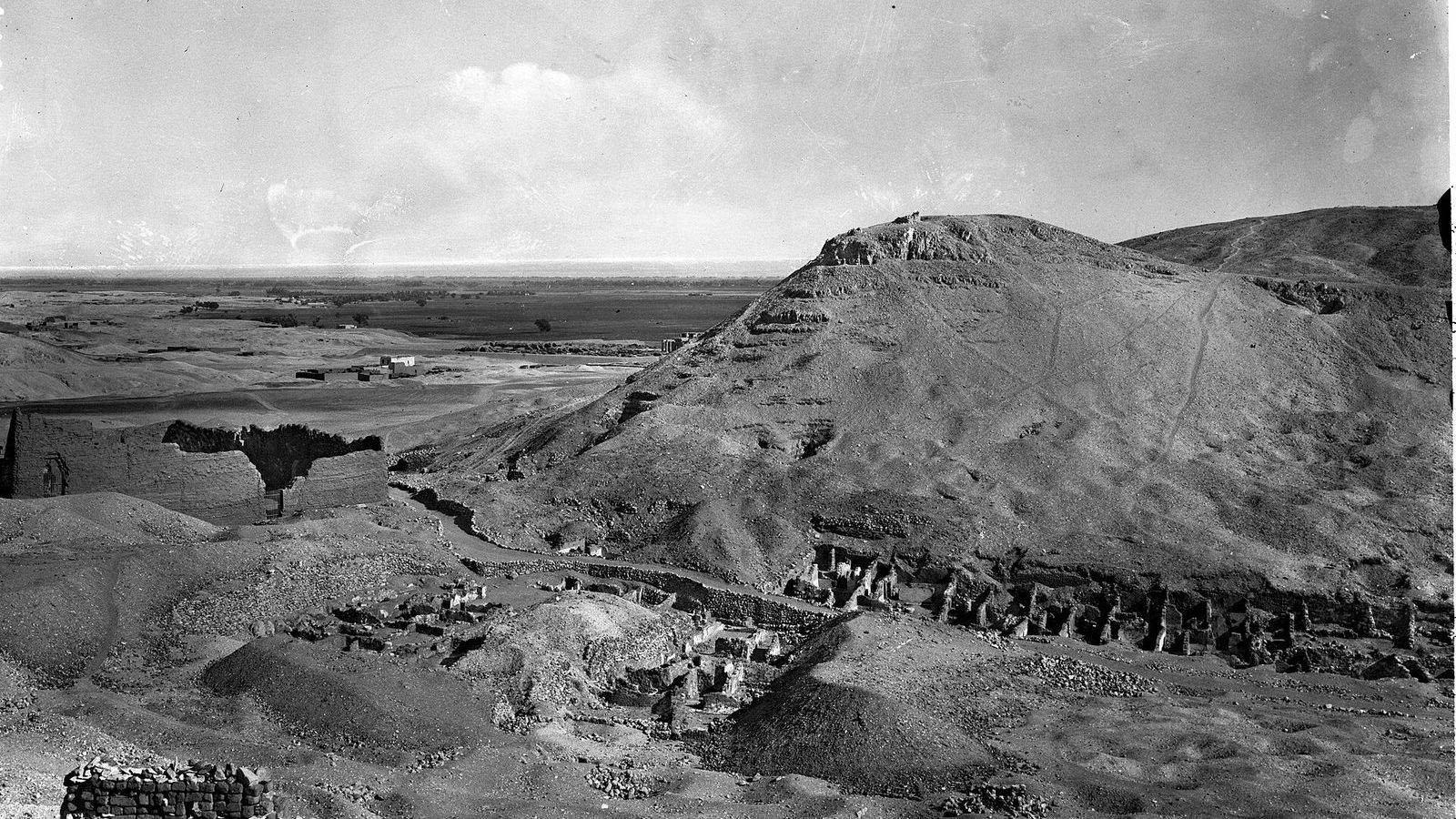
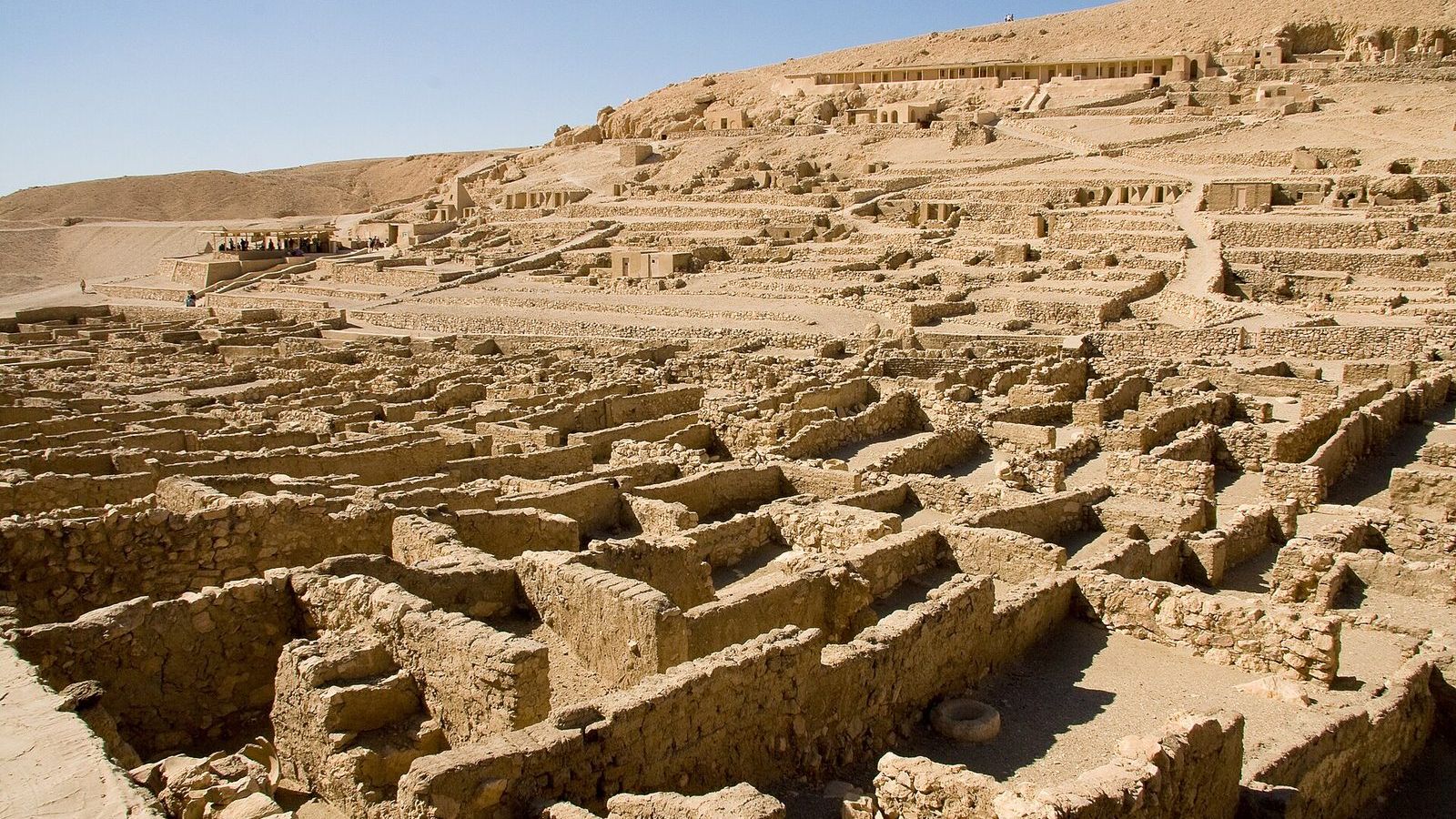
Egyptian tomb walls are covered with food. Oxen are led to the slaughter, geese are force-fed, grapes are trodden, and tables sag under loaves and joints. These are pictures of what the dead hoped to eat for eternity, and they are not a record of what the living ate on an ordinary day. For that we have to turn to the texts that recorded wages, and the best of them come from the village of the royal tomb builders at Deir el-Medina.
The wage
A workman of the gang received each month 4 khar of emmer wheat and 1.5 khar of barley. The khar was a sack of about 77 litres, so the monthly ration was about 300 litres of emmer and about 115 litres of barley. The foremen and the scribe received more, about 5.5 khar of emmer. Emmer was for bread and barley was mostly for beer, and the two together were the wage, the staple, and the unit of account of the village. Deliveries were recorded in the work journals, and complaints about short or late deliveries are among the commonest documents from the site.
How much is 300 litres of emmer? Emmer is a hulled wheat and was stored in its spikelets, with the husk still on, which take up more space than clean grain. After dehusking, which was women's work with a mortar and pestle, 300 litres of spikelets yield something like 100 to 120 kg of grain, depending on how the volume is read. Wheat has about 3,400 kilocalories per kilogram, so the emmer alone carried roughly 350,000 to 400,000 kilocalories a month, or 12,000 to 13,000 a day. An adult doing physical work needs about 2,500 to 3,000. The emmer ration alone could feed four or five adults, before counting the barley, the fish, and the vegetables.
In loaves and jugs
Egyptian bread was made from emmer flour, water, and sometimes a sourdough starter, and baked in conical moulds, on hot stones, or against the inner wall of a cylindrical oven. Loaves varied in size, but a flat loaf of about 300 g of flour is a fair average. At that size, 100 kg of grain milled to a coarse flour makes about 300 loaves a month, or ten a day. The workmen's households were not small; a family of six to eight, with servants or relatives who did the grinding and the water carrying, is typical of the village. Ten loaves a day for eight people is a reasonable staple.
Beer was brewed from barley and from bread, by steeping lightly baked loaves in water and letting the mixture ferment for a day or two. It was thick, cloudy, nutritious, and low in alcohol by modern standards, and it was drunk by everyone, children included. A khar of barley made perhaps a hundred litres of beer, so the household had three or four litres a day. Beer was also food: much of the grain's calories went into it, and in a hot climate it was the safe drink.
Everything else
The grain wage was topped up by regular deliveries from the state: fish, which the village's own fishermen caught in the Nile under a quota recorded in the journals; vegetables, above all onions, leeks, lettuce, cucumbers, and beans; water, carried up from the river by water carriers because the village had no well; firewood; and pottery. On festival days the temple sent cakes, beer, and meat. Dates, figs, and sycomore figs grew locally. Honey was the only sweetener. Oil came from the moringa tree and later from sesame; olive oil was imported and expensive.
Meat was rare on ordinary days. Beef was the food of the gods and of the rich, and a workman ate it at festivals when the offerings came down from the temple. Goats, sheep, and pigs were kept in the village; pig bones are common at workers' settlements, whatever the later Greek writers said about Egyptian attitudes to pigs. Geese and ducks were eaten; the chicken did not reach Egypt in any numbers until the Late Period. Wine was a luxury of the upper classes and of the temples, and the jars from Tutankhamun's tomb record the vineyard and the vintage year like a label.
The ostraca also give prices in copper by weight, which show how the surplus grain was spent. A workman's monthly emmer was worth about 8 deben of copper, a goat about 1 to 3 deben, a bed about 20, and a coffin 20 to 40. A household that ate half its grain could trade the rest for clothes, furniture, and, over a lifetime, a funeral.
What the bodies say
The skeletons of Egyptians confirm the diet and its costs. Teeth are worn flat, because the flour was milled on sandstone and the bread was full of grit, and dental abscesses were common. Adults were shorter than today, men about 165 cm on average, and many show signs of hard labour in their joints and spines. Famine years left their mark in the growth lines of teeth and bones. The workmen of Deir el-Medina, who were well paid by the standards of their time, were better fed than the farmers who grew their grain, and the difference is measurable in the bones.
The numbers above are estimates built on a few assumptions, which is how Egyptologists work with them. The ration is certain, because the texts give it. The calories depend on how the khar is read and on how much husk is lost, and estimates in the literature vary by a third either way. What is not in doubt is the conclusion: a workman's grain was more than one family needed, and the surplus was the village's money.
Where this appears in the masterclass
Unit 7 of the Egyptology Masterclass, Life in the Black Land, takes the monthly ration apart in its first worked case, dividing it into loaves and jugs for a household of six, and follows a barter transaction from an ostracon in the second. An interactive ration calculator lets you change the household size and the assumptions and see what happens to the surplus.