 Image: Clemensfranz (CC BY-SA 4.0); the Philae obelisk at Kingston Lacy
How Champollion read a royal name
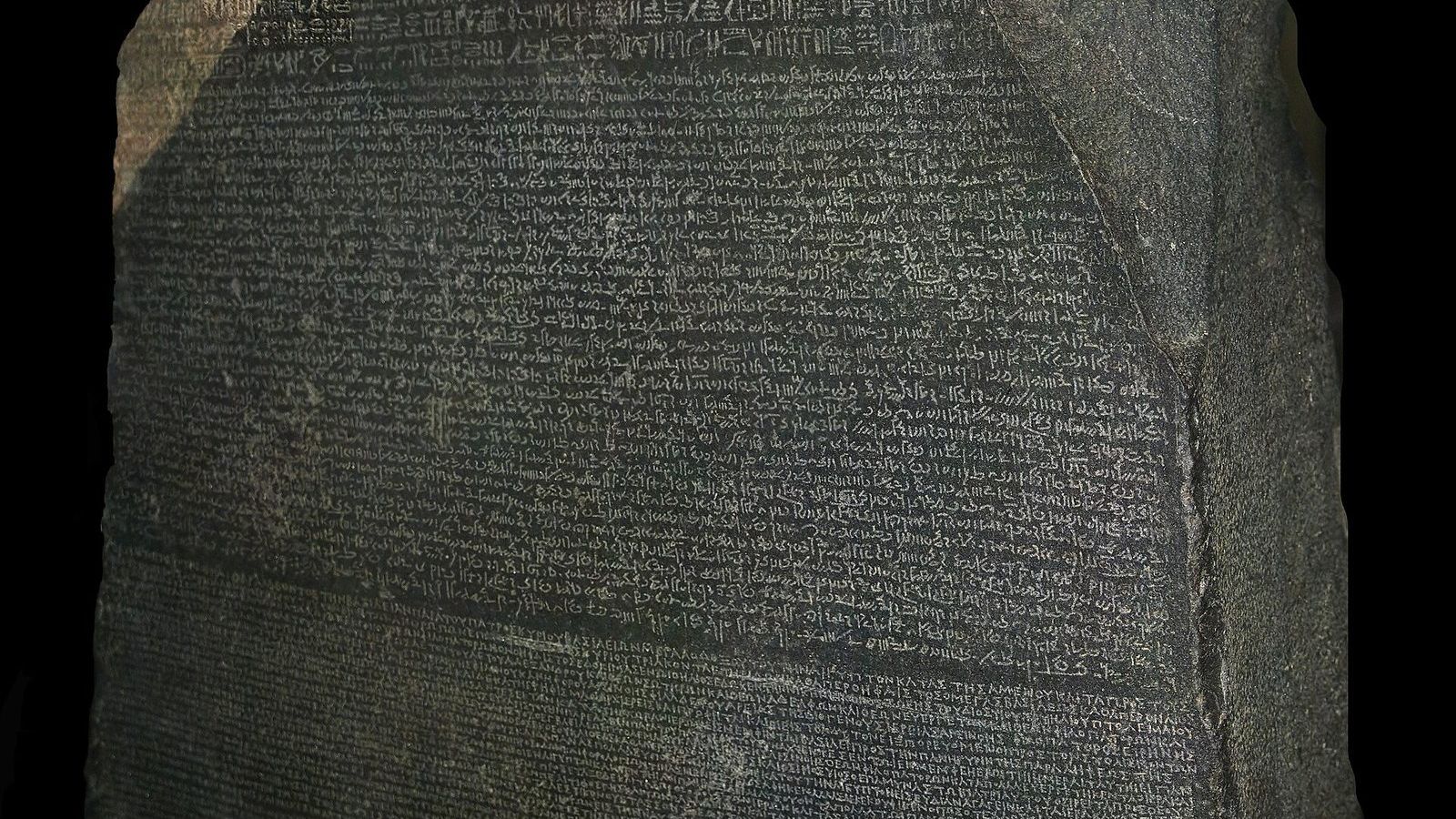
In July 1799 French soldiers rebuilding a fort at Rashid, on the western branch of the Nile Delta, pulled a slab of dark granodiorite out of an old wall. It carried three bands of writing: hieroglyphs at the top, a cursive script in the middle that nobody recognized, and Greek at the bottom. The Greek could be read at once. It was a decree of the priests of Egypt for King Ptolemy V, dated to 196 BC, and its last line said that the same text was to be cut in sacred, native, and Greek letters. For the first time a text in hieroglyphs came with its own translation. The problem was that nobody knew how hieroglyphs worked.
What people believed in 1800
The learned view since late antiquity was that hieroglyphs were symbols of ideas, not of sounds. A Greek writer of the fifth century AD, Horapollo, had explained that the picture of a goose meant son, because geese love their young, and that a hare meant open, because hares sleep with their eyes open. Scholars of the seventeenth century, Athanasius Kircher above all, had built whole mystical readings on this basis. If the signs were pictures of ideas, a bilingual text would help only a little, because you would still have to guess which idea each picture stood for.
The way in was the cursive middle script, which we now call Demotic. Two scholars, Silvestre de Sacy in Paris and Johan David Åkerblad in Sweden, noticed around 1802 that the Greek names in the decree, Ptolemy and Alexander among them, could be found in the Demotic at the places where the Greek text had them, and that the groups of Demotic signs that wrote the names were alphabetic. Foreign names, at least, were written by sound.
Young and the cartouche of Ptolemy
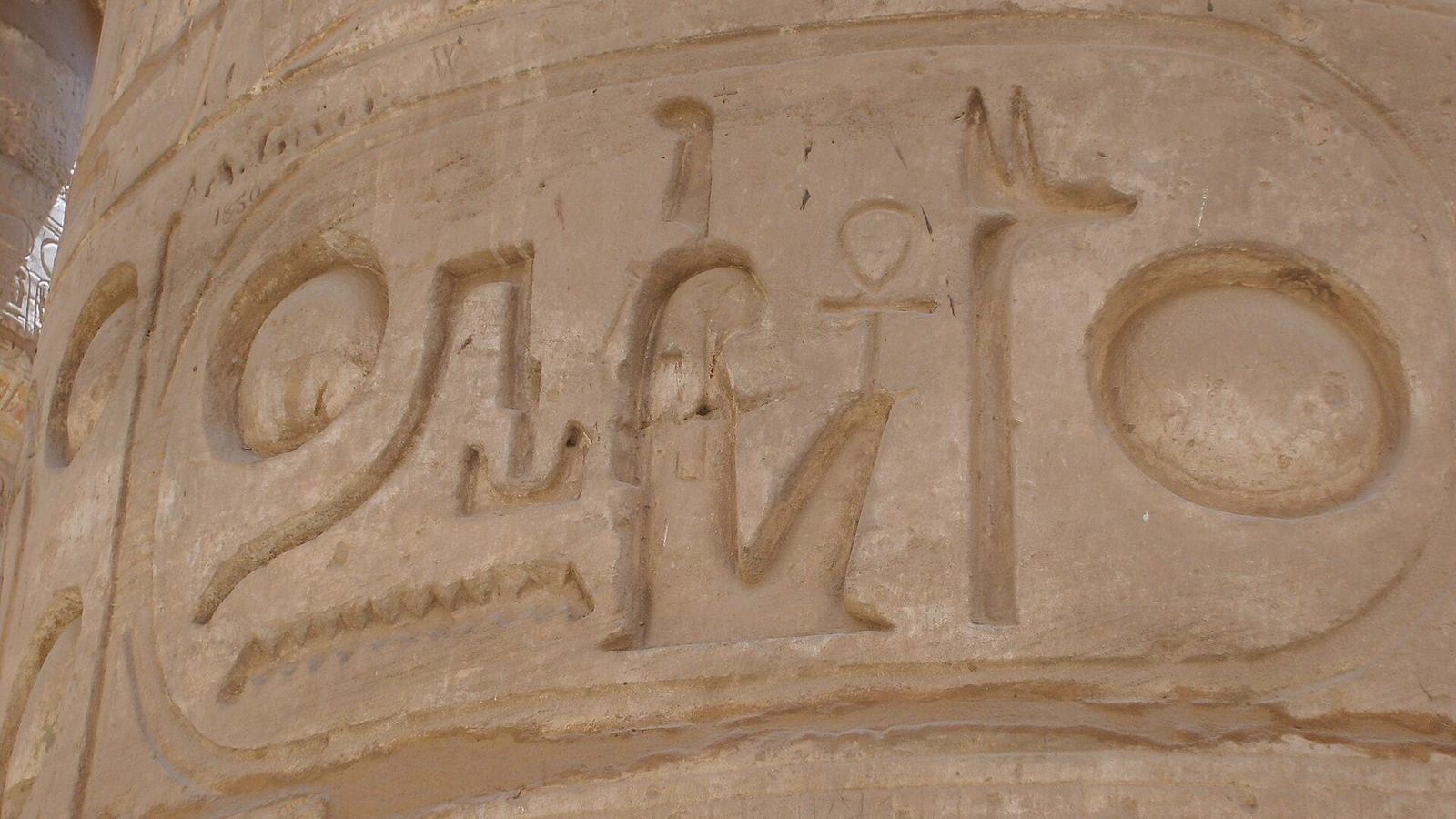
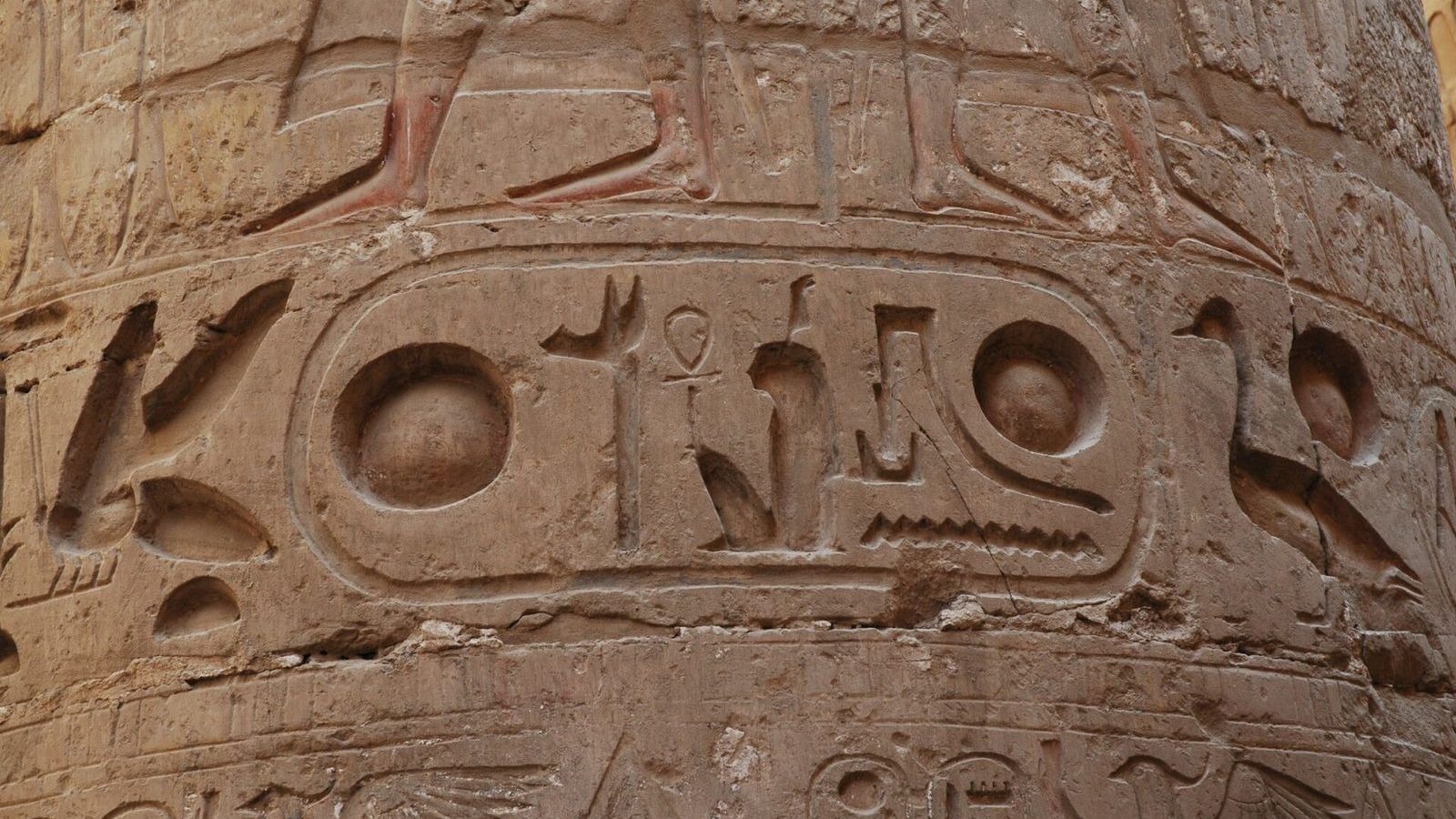
In the hieroglyphic band the Greek names were easy to locate, because royal names were enclosed in an oval ring, which the French soldiers had called a cartouche, a cartridge. Only one cartouche survives in full on the Rosetta Stone, and it had to be Ptolemy. Between 1814 and 1819 the English physician and physicist Thomas Young matched its signs to the sounds of the Greek name and got most of them right: a square for p, a half circle for t, a lasso for o, a lion for l, and a folded cloth for s. He published the result in an encyclopaedia article in 1819. But Young believed that only foreign names were spelt out in this way, and that the rest of the script remained symbolic. He had opened a door and stopped at it.
The obelisk from Philae
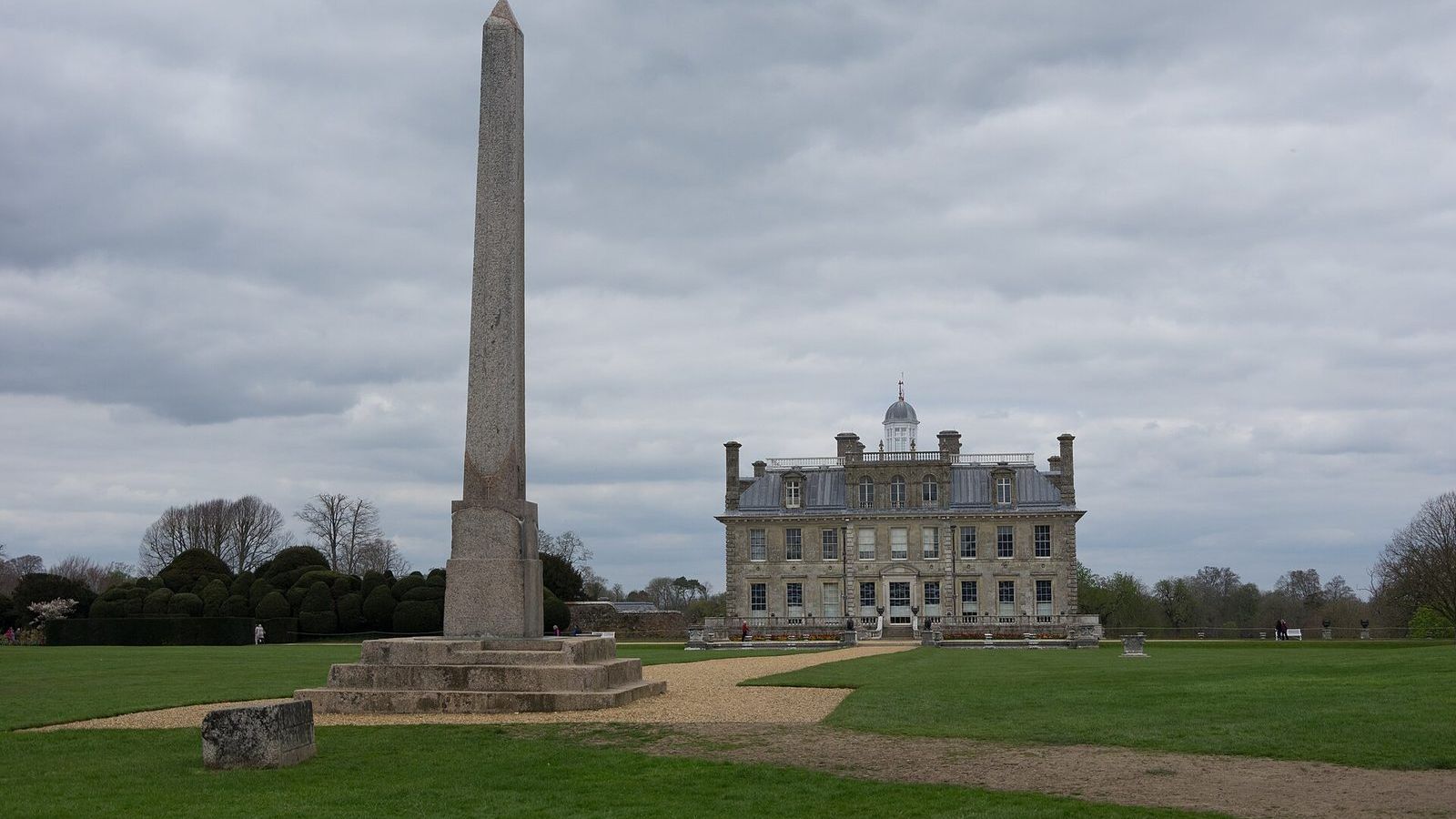
The next cartouche came from an obelisk. William John Bankes, an English traveller, had found a small obelisk at the temple of Philae near Aswan and shipped it to his house at Kingston Lacy in Dorset, where it still stands. Its base carried a Greek inscription naming Ptolemy and Cleopatra, and its shaft carried two cartouches in hieroglyphs. Bankes had lithographs made and sent them to scholars across Europe. A copy reached Jean-François Champollion in Paris in January 1822.
Champollion was thirty-one. He had been obsessed with Egypt since he was a boy in Grenoble, and he had something Young lacked: fluent Coptic, the last form of the Egyptian language, written in Greek letters and still used in the liturgy of the Egyptian church. Coptic told him what Egyptian words sounded like.
He set the two cartouches of the obelisk beside the Ptolemy of the Rosetta Stone. One of them was the same as Ptolemy. The other had to be Cleopatra. If the script was alphabetic for foreign names, then the two names should share signs where they share sounds. Ptolemy has a p, a t, an o, and an l. Cleopatra has them too, in a different order. He checked. The lion stood in the second place of Cleopatra and the fourth of Ptolemy, exactly where the l falls in each name. The square p sat in the fifth place of Cleopatra and the first of Ptolemy. The lasso o and the t were in their places too, with one wrinkle: the t of Cleopatra was written with a different sign, a hand, where Ptolemy used the half circle. Two signs with one value was the first hint that the script was richer than an alphabet. The remaining signs of Cleopatra, a reed leaf for e or i, a vulture for a, a mouth for r, filled in the rest. The method worked, and it gave him about a dozen signs with secure values.
14 September 1822
Through the spring and summer of 1822 Champollion collected cartouches of the Greek and Roman rulers of Egypt from copies of inscriptions and read their names with his growing alphabet: Alexander, Berenice, Caesar, Trajan. All of them were foreign. The question was whether the Egyptians had ever written their own names and words by sound.
On the morning of 14 September his friend the architect Jean-Nicolas Huyot sent him drawings of cartouches from the temple of Abu Simbel, far south of Aswan, which could not be Greek or Roman. One of them began with a circle, the sun, and ended with two folded cloths, which he knew were s. Between them stood a sign with three prongs. In Coptic the sun is re. If the three-pronged sign had the value ms, as another text suggested, the cartouche read Ra-ms-s, Ramesses, a name he knew from the Greek historians and from Manetho's king list. A second cartouche began with an ibis, the bird of the god Thoth, and continued with the same ms: Thoth-ms, Thutmose. These were Egyptian names, written by sound, with a mixture of signs that stood for one consonant and signs that stood for two or three.
He ran from his flat to the Institut, where his brother worked, threw the papers on the desk, said that he had it, and fainted. He was in bed for days.
The letter of 27 September
Thirteen days later, on 27 September 1822, he read his results to the Académie des Inscriptions et Belles-Lettres in Paris, in a paper addressed to its secretary, Bon-Joseph Dacier. The Lettre à M. Dacier presented the alphabet of signs used for foreign names and claimed, cautiously, that the same signs were used for Egyptian names too. Young was in the audience. The real claim, that the whole script mixed sound signs and sense signs, came in his longer book of 1824, the Précis du système hiéroglyphique, and the grammar and dictionary followed after his death in 1832, at the age of forty-one.
The dispute between Young and Champollion over who deserved the credit began in their lifetimes and has never quite ended. The fair summary is that Young read a cartouche and Champollion read the script. Young found that some signs wrote sounds; Champollion showed that most of them did, worked out the values of the biliteral and triliteral signs, saw the role of the determinatives that mark the class of a word, and used Coptic to turn consonant skeletons into words of a language.
Try it yourself
Unit 3 of the Egyptology Masterclass, which is the sample unit and open to everyone, walks through exactly these readings with plates of the cartouches: Ptolemy sign by sign, Cleopatra against Ptolemy, Ramesses from Abu Simbel, and Tutankhamun with the name of the god written first out of respect. By the end of it most readers can find and read a dozen royal names in any museum. Champollion needed twenty years and a bilingual; with his results in hand, an afternoon will do.